

Did You Know?
An industrial engineer once helped a pizza chain shave 45 seconds off every order by rearranging the position of the toppings station and changing the order employees followed when building a pizza. Tiny changes like that, multiplied across thousands of locations, save millions of dollars.
The Numbers Behind the Career
About 25,200 industrial engineer job openings are projected annually over the next decade.
The 2024 median annual salary for industrial engineers was $101,140.
There were about 351,000 industrial engineer jobs in the U.S. in 2024.
Where This Career Is Headed
Artificial intelligence, advanced automation, and data analytics are transforming the role of industrial engineers. AI-powered tools can now analyze massive datasets to identify inefficiencies that would have taken human engineers weeks to uncover, allowing industrial engineers to focus on designing and implementing solutions rather than spending as much time on data gathering. At the same time, the growth of e-commerce, the push toward sustainable manufacturing, and the increasing complexity of global supply chains are creating new demand for professionals who can optimize systems at scale. As companies across every industry look for ways to do more with less while reducing their environmental impact, industrial engineers will play a central role in shaping how work gets done.
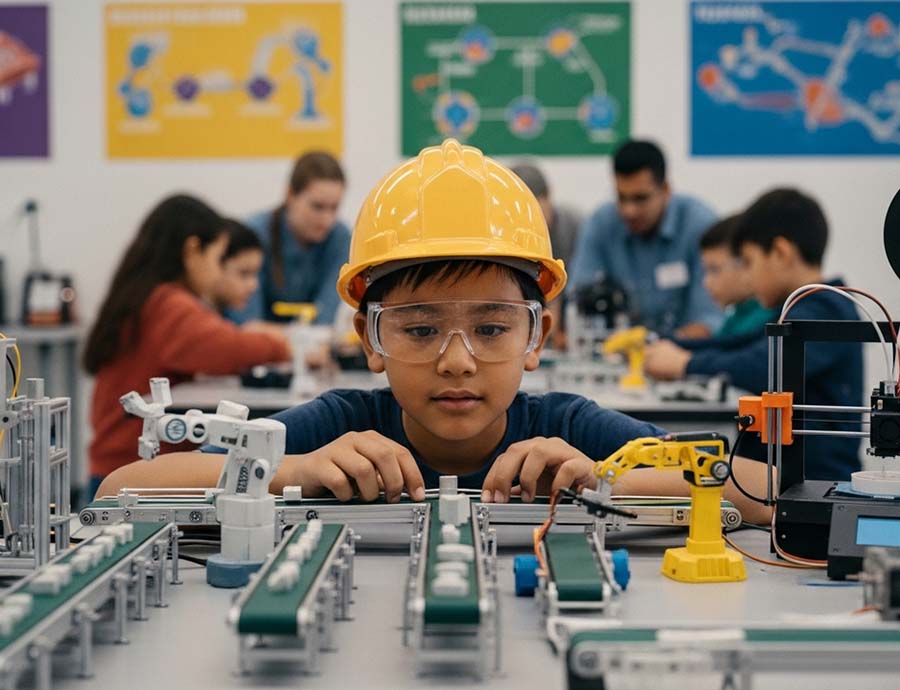
AI and machine learning tools will expand the scope of what industrial engineers can analyze and optimize, enabling them to tackle larger, more complex systems with greater speed and precision.
The growth of e-commerce and same-day delivery expectations will drive demand for industrial engineers who can design and optimize warehouses, distribution networks, and last-mile logistics.
Healthcare systems are increasingly hiring industrial engineers to improve patient flow, reduce costs, and redesign processes in hospitals, clinics, and public health organizations.
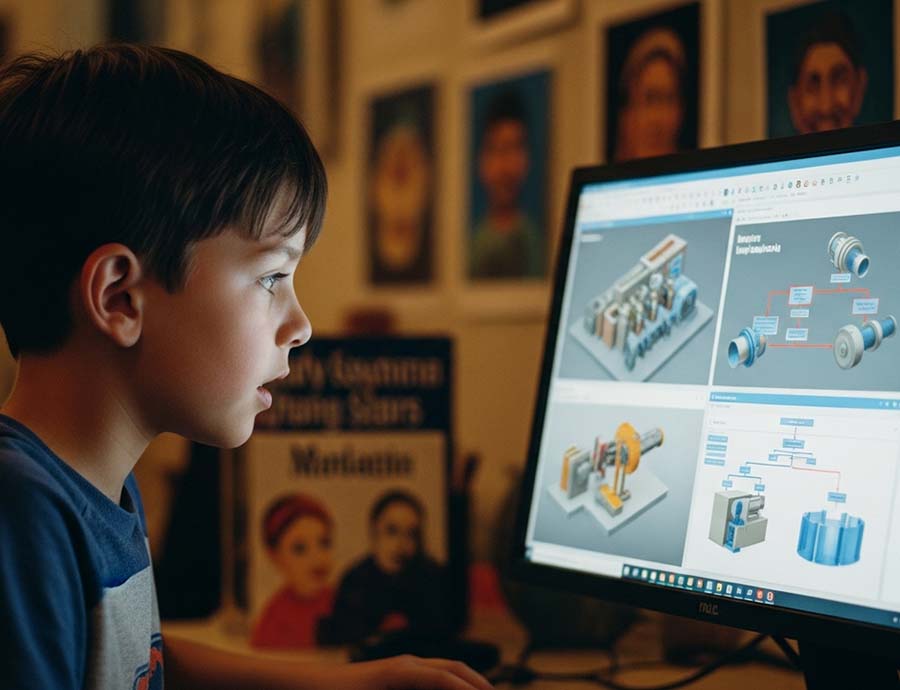
Education & Certification
Most industrial engineers hold a bachelor's degree in industrial engineering, manufacturing engineering, or a closely related field such as systems engineering or operations research. Undergraduate programs typically cover statistics, operations research, production systems, quality control, ergonomics, and engineering economics, along with foundational coursework in math, physics, and computer science. Many industrial engineers pursue master's degrees to specialize in areas like supply chain management, data analytics, or healthcare systems engineering, which can open doors to more advanced and higher-paying positions. A bachelor's degree is the primary requirement for entering the field, and most industrial engineers begin their careers immediately after completing their undergraduate education.
Unlike some other engineering disciplines, industrial engineers are not typically required to hold a Professional Engineer (PE) license, though it is available and can be an advantage in consulting, government, or certain manufacturing roles. Professional certifications such as Certified Six Sigma Green Belt or Black Belt, Certified Supply Chain Professional (CSCP), and Certified in Production and Inventory Management (CPIM) are also optional but can strengthen an industrial engineer's expertise and support career advancement over time.
To Prepare...
Take courses in math (especially statistics, algebra, and calculus), physics, and computer science to build the quantitative and analytical foundation that industrial engineering relies on.
Look for opportunities to practice systems thinking through robotics clubs, business competitions, coding projects, or process improvement challenges that involve analyzing and optimizing how something works.
Take on projects in classes like business, economics, or technology that involve analyzing a process and proposing improvements, such as studying how your school cafeteria, library, or event setup could run more efficiently.
Spotlight: Explore the Life of a Industrial Engineer



Explore more resources for a future Industrial Engineer

Spic-and-Span!: Lillian Gilbreth's Wonder Kitchen (Great Idea Series)
Kulling, Monica
Why We Picked It
Career Connection
Industrial engineers analyze how people work and redesign systems to reduce wasted effort, and Gilbreth's kitchen redesign is a perfect illustration: studying every step a cook takes and rearranging the workspace so the work flows more naturally.

Famous Women in Engineering History—Book 3—Lillian Gilbreth: Transforming Work
Rosengren, Paul Lief
Why We Picked It
Career Connection
Industrial engineers optimize systems for human performance and well-being, and Gilbreth's career spanning factory floors, kitchen redesigns, and accessibility work shows how broadly that mission can reach when an engineer puts people at the center.

How Cars Work. An Illustrated Guide for Curious Kids, Teens, and Beginners: Discover Engines, Brakes, Gears, and More with Fun Diagrams and Easy Explanations!
Renson, Peter
Why We Picked It
Career Connection
Industrial engineers study how complex systems work and how to optimize every component's contribution, and understanding how a car's many subsystems coordinate to do one job reliably is an excellent early introduction to systems thinking.