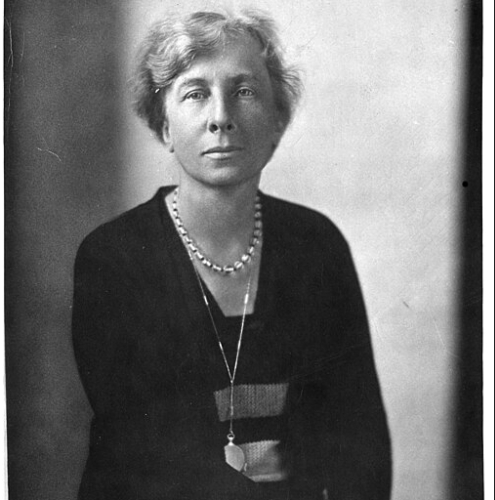
Photo: Smithsonian Institution from United States, No restrictions, via Wikimedia Commons
Who She Is
Lillian Moller Gilbreth started with a question most people never thought to ask: what if we could make work better for the person doing it? Born in 1878, she earned a doctorate from Brown University at a time when very few women pursued advanced degrees in any field. She studied how people performed everyday tasks in factories and kitchens, looking for ways to make those tasks safer, faster, and less exhausting. What made her different from other efficiency experts was that she cared as much about the worker as the work. Gilbreth raised twelve children while building her career (their family inspired the book and film "Cheaper by the Dozen"). She became known as the "Mother of Modern Management," and was the first woman elected to the National Academy of Engineering.
Why She Matters
Lillian Gilbreth changed what industrial engineering was about. Before her, efficiency meant squeezing more output from workers. She proved it could mean making work better for people while also making it more productive, whether a person was redesigning kitchens or developing tools for people with disabilities. She showed that understanding the human experience leads to smarter solutions. Gilbreth did all of this at a time when women were told they did not belong in engineering, and she became one of the most respected voices in the field anyway. Her story is a reminder that industrial engineering has always been about looking at the world and asking, "How could this work better for people?"