Photo: SumitAwinash, CC BY-SA 4.0 <https://creativecommons.org/licenses/by-sa/4.0>, via Wikimedia Commons
Overview
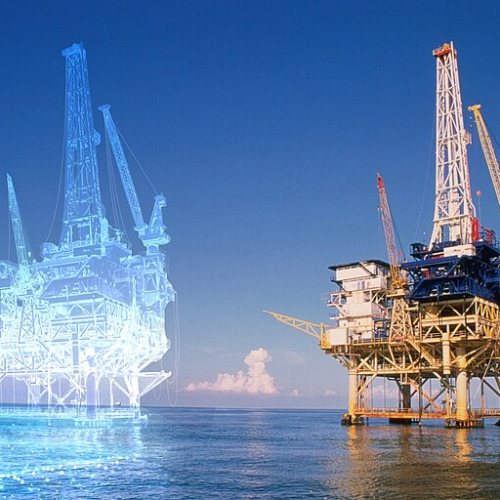
What if you could build an exact copy of an entire factory, hospital, or city inside a computer and test any change you want without any risk? That is what a digital twin is. Industrial engineers use real-time data from sensors, cameras, and software to create virtual replicas of real-world systems that update continuously as conditions change. If an engineer wants to know what would happen if a warehouse rearranged its layout or a hospital changed how patients flow through the emergency room, they can run the experiment on the digital twin and see the results before anything is touched in real life. It is like having a practice mode for the real world, and it is quickly becoming one of the most powerful tools industrial engineers have ever had.
Why It Matters
Digital twins are changing what it means to be an industrial engineer. Instead of relying on educated guesses, engineers can now test hundreds of "what if" scenarios in minutes and choose the best solution before spending a single dollar. Hospitals are using them to cut wait times, shipping companies to optimize routes for thousands of vehicles, and manufacturers to predict exactly when a machine will break down before it causes a shutdown. This technology is still young, which means the industrial engineers who master it will be the ones shaping how it is used across every industry in the coming decades. For students who love solving real problems with data, technology, and creative thinking, digital twins are a glimpse of where this career is headed.