Did You Know?
Clarence Birdseye got the idea for modern frozen food after watching Inuit fishermen in northeast Canada pull fish through the ice, where they froze almost instantly in the bitter cold. Freezing that fast forms tiny ice crystals, which keeps food tasting fresh when it’s thawed.
The Numbers Behind the Career
About 2,500 agricultural inspector job openings are projected each year over the next decade.
The median salary for agricultural inspectors, the job category that includes food safety inspectors, in the U.S. as of 2025 was $49,940.
There were about 17,800 agricultural inspectors in the U.S. in 2025.
Where This Career Is Headed
Technology, a more global food supply, and new rules are reshaping food safety work. Whole-genome sequencing lets investigators compare the DNA of germs from sick people with germs found in food or factories, helping them find the source of an outbreak much faster than older methods. Agencies are also testing AI tools that help decide which facilities and imported foods to check first. Under the Food Safety Modernization Act (FSMA), the FDA issued a food traceability rule requiring companies to keep detailed records so certain foods can be tracked through the supply chain, with compliance required by July 2028. As the food system grows more connected, professionals who can work at the meeting point of science, technology, and regulation will be in demand.
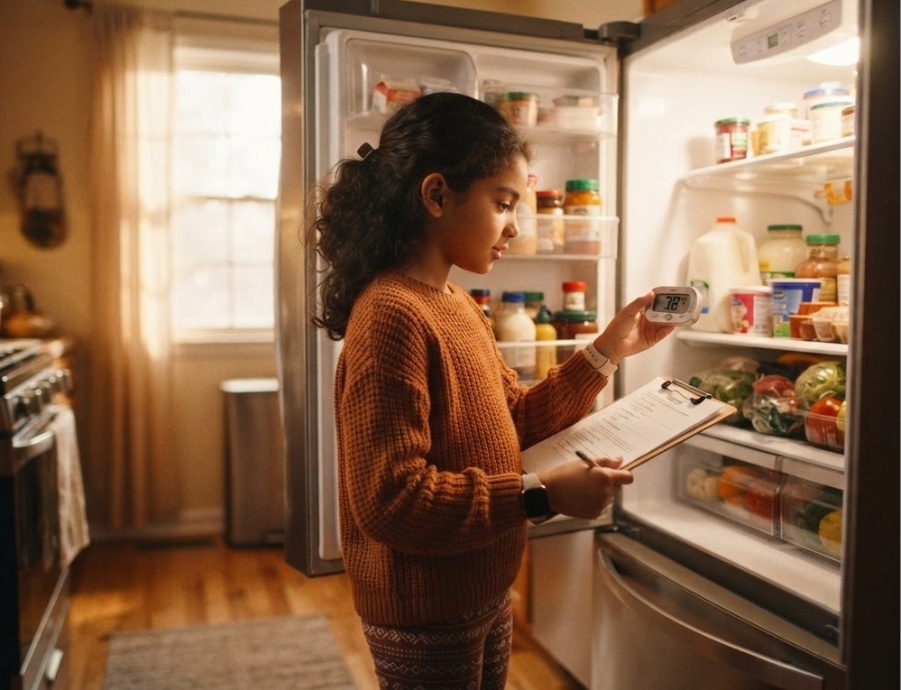
Advances in genetic testing, AI-powered risk analysis, and faster lab tests are expanding the tools food safety professionals can use.
Many food companies now focus on building a strong "food safety culture," which creates roles for professionals who help organizations prevent problems instead of just preparing to pass inspections.
New traceability requirements will create work for people who can help companies track food quickly and accurately when something goes wrong.

Education & Certification
Education requirements depend on the employer. Entry-level food inspectors with the USDA's Food Safety and Inspection Service can qualify with either a bachelor's degree that includes at least 12 semester hours of science or a year of related experience, such as work in food processing, food quality control, or professional cooking. FDA investigators and many state and local health inspectors usually need a bachelor's degree in a science such as biology, microbiology, chemistry, food science, environmental health, or public health. Some food safety professionals go on to earn graduate degrees in food science, public health, or epidemiology, especially for research, policy, or leadership roles.
Several professional credentials can help a food safety career grow. The National Environmental Health Association (NEHA) offers the Certified Professional in Food Safety (CP-FS) credential and the Registered Environmental Health Specialist/Registered Sanitarian (REHS/RS) credential, which is valued in many state and local health inspection jobs.
To Prepare...
Take classes in biology, chemistry, health, and environmental science to build a foundation in the sciences food safety professionals use every day.
Explore college programs in food science, public health, or environmental health, and look for ones with hands-on lab and field experience.
Look into student internships and fellowships with agencies such as the FDA, USDA, CDC, or your state health department to learn how food safety work is done.
Spotlight: Explore the Life of a Food Safety Inspector

Dr. Abby Snyder
Learn More
Stop Foodborne Illness (STOP)
Learn More