Photo: GSAPPstudent, CC BY-SA 4.0 <https://creativecommons.org/licenses/by-sa/4.0>, via Wikimedia Commons
Who He Was
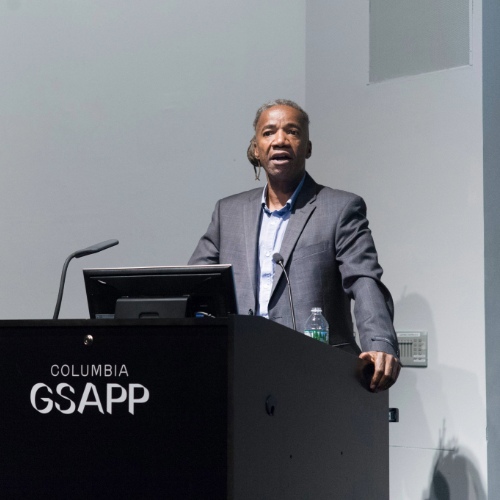
Walter Hood grew up in Charlotte, North Carolina, before becoming a landscape architect known for designing public spaces that reflect a place’s history. He founded Hood Design Studio in Oakland, California, in 1992, and his work ranges from the gardens around San Francisco’s de Young Museum to Witness Walls, a civil rights memorial in Nashville. His best-known project is the African Ancestors Memorial Garden at the International African American Museum in Charleston, South Carolina, which opened in 2023 on Gadsden’s Wharf, the arrival point for nearly half of the enslaved Africans brought to North America. The museum building stands on pillars so the memorial landscape, with its sweetgrass plantings and a shallow fountain that reveals human outlines as the water drains away, can flow underneath. In 2019, he received a MacArthur Fellowship, sometimes called a “Genius Grant,” for this design approach. He continues to teach landscape architecture at the University of California, Berkeley, alongside his practice.
Why He Matters
Hood treats a park or plaza as a place that can hold memory, not just greenery and benches. His projects often recover stories, especially African American history, that standard city planning left out of the landscape entirely. Working this way requires archival research and long conversations with the people who remember a place, not just design software and site surveys. The Charleston memorial grew out of years of community meetings before anything was built. It shows that landscape architecture can shape how a community understands its own past as much as how a space functions day to day. In his hands, a well-designed public space becomes a way to set the record straight.