Photo: Photograph by Mike Peel (www.mikepeel.net)., CC BY-SA 4.0 <https://creativecommons.org/licenses/by-sa/4.0>, via Wikimedia Commons
What It Is
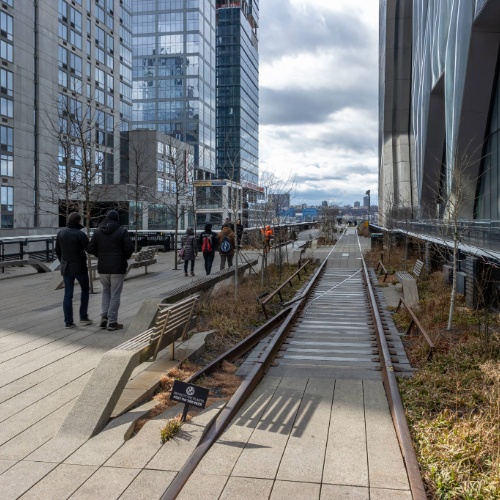
The High Line began as an elevated freight rail line running through Manhattan’s West Side, carrying trains above the streets from 1934 until the last train ran in 1980. It then sat abandoned for two decades, slowly filling in with wild grasses and weeds. The city planned to tear it down, and the mayor signed a demolition order in 2001, but two neighborhood residents, Joshua David and Robert Hammond, had already founded a group to save it and turn it into a public park built right on top of the old tracks. The landscape architects at James Corner Field Operations, working with architects Diller Scofidio + Renfro and planting designer Piet Oudolf, designed the park to keep the feeling of that wild, overgrown rail line, using plants that echoed what had grown there naturally, woven between the original steel rails. It opened in sections starting in 2009 and quickly became one of the most visited public spaces in New York City, drawing millions of visitors a year to walk about thirty feet above the street. Cities around the world have since studied it as a model for turning old, unused infrastructure into public green space.
Why It Matters
The High Line proved that a piece of forgotten industrial infrastructure could become one of a city’s most loved public spaces without pretending its past never happened. Instead of scraping the site down to nothing and starting over, the design leaned into the rusted rails and rough textures already there, letting the park’s history stay visible. That choice influenced landscape architects everywhere to look at abandoned bridges, rail lines, and factories not as eyesores to remove, but as raw material for something new. It also showed how much a single park can reshape an entire neighborhood, changing property values and foot traffic for blocks in every direction. It stands as a reminder that some of the most interesting spaces come from transforming what already exists, not building from scratch.