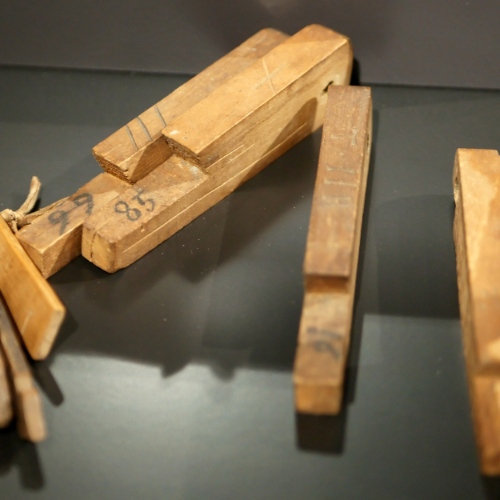
Photo: ALPS, CC BY 3.0 <https://creativecommons.org/licenses/by/3.0>, via Wikimedia Commons
What They Were
A tally stick was a notched piece of wood that people in medieval England used to record a debt or a tax payment. Notches in the stick showed the amount, then they split it lengthwise so each side kept half. The halves were called the stock and the foil, and when the two pieces fit together, the match showed that the record was real. England’s Exchequer, its treasury office, used split tally sticks from the 12th century until 1826. In 1834, workers burned the leftover sticks in furnaces beneath the House of Lords, and the fire spread, destroying most of the Palace of Westminster, where Parliament met.
Why They Matter
Tally sticks solved the same problem blockchains solve: how two sides can trust a record without trusting each other. Because each side held half, and the unique grain of the split wood was hard to fake, the system made forgery difficult. A blockchain works in a similar spirit, with many computers each holding a copy that must match the others. The tally stick system lasted for centuries, showing how long a simple, well-designed record-keeping idea can endure. Its fiery end also reminds us that records need care long after they stop being used.