Photo: Weizmann Institute of Science, Public domain, via Wikimedia Commons
Who She Is
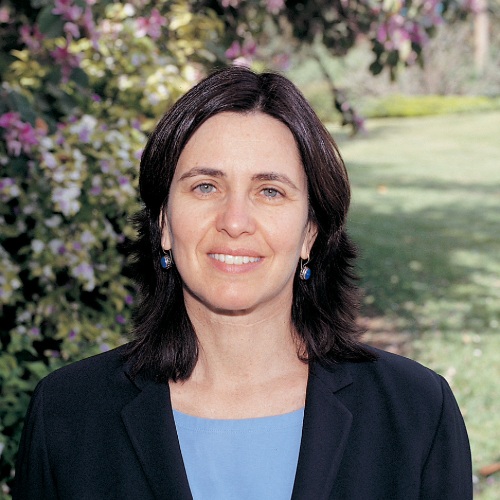
Shafi Goldwasser is a computer scientist and cryptographer, an expert in the math of keeping information secret and proving what's true. She was born in New York City in 1959, grew up in Tel Aviv, Israel, and returned to the United States for college, where she studied mathematics and then computer science. In the early 1980s, she and Silvio Micali published work on encryption that gave a precise definition of what it means for encrypted information to be secure, and she joined MIT in 1983. In 1985, working with Micali and Charles Rackoff, she helped invent zero-knowledge proofs, a way to prove a fact is true without revealing anything else about it. In 2012, she and Micali won the Turing Award, often called the Nobel Prize of computing, for work that laid the foundations of modern cryptography. She also co-founded a company that builds privacy-protecting technology and has advised blockchain companies.
Why She Matters
Shafi Goldwasser’s ideas let people prove something is true without revealing private information, a problem every trust-based system must solve. Zero-knowledge proofs began as theory in the 1980s, but today engineers use them in blockchains and digital wallets, for example, to prove someone is old enough for a website without sharing a birthday. Her story shows that an idea can wait decades to find its uses, since work from the 1980s now shapes tools built in the 2020s. It also shows how much of blockchain engineering rests on math, because the privacy and security of these systems depend on proofs, not on trusting any one person. For anyone who likes math, puzzles, and big ideas, their career shows how theory can become technology that protects people.