Photo: Narek75, CC BY-SA 4.0 <https://creativecommons.org/licenses/by-sa/4.0>, via Wikimedia Commons
Recirculating Aquaculture Systems
What It Is
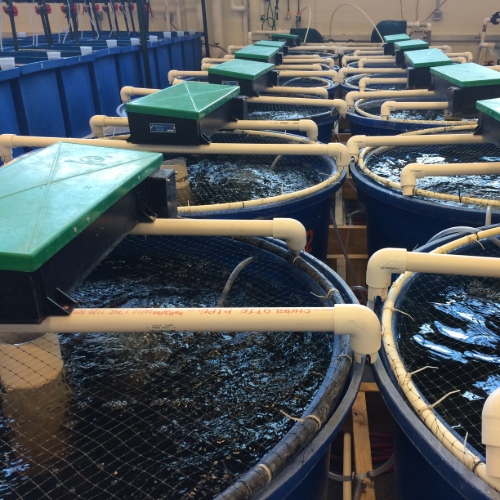
A recirculating aquaculture system, or RAS, is a way of raising fish or shrimp indoors in tanks while cleaning and reusing almost all of the water instead of letting it flow through once and out. Water leaving the tanks passes through a series of treatment steps: filters remove solid waste and uneaten feed, a biological filter full of helpful bacteria converts the ammonia fish excrete into far less harmful nitrate, the water is re-oxygenated and often disinfected, and its pH is adjusted before it returns to the fish. Only a small amount of new water is added on each cycle to replace what is lost. Because the system is sealed off from rivers and oceans, farmers control temperature, oxygen, and water quality precisely, keep wild diseases and parasites out, and capture waste rather than releasing it. The trade-off is that RAS farms depend on pumps, sensors, and electricity around the clock, so they need technicians who can keep both the animals and the machinery healthy.
Why It Matters
RAS is changing where and how seafood can be grown. Species like salmon that once could only be farmed in cold coastal waters can now be raised in a warehouse near a major city, cutting shipping distances and the pressure on crowded coastlines. For aquaculture technicians, it means the job is as much about reading a dashboard of sensor data and maintaining filtration equipment as it is about handling fish, and a technician who understands both is valuable. It also raises the stakes: when water is reused, a pump failure or a bad reading can affect every tank at once, so the careful monitoring technicians do matters more than ever. RAS represents the direction much of the industry is heading, and the skills it demands are the skills new technicians will be hired for.