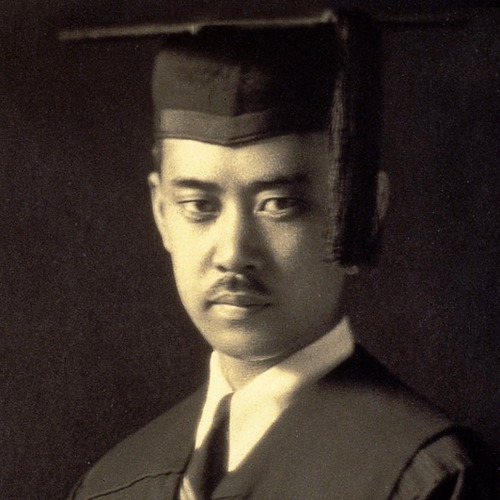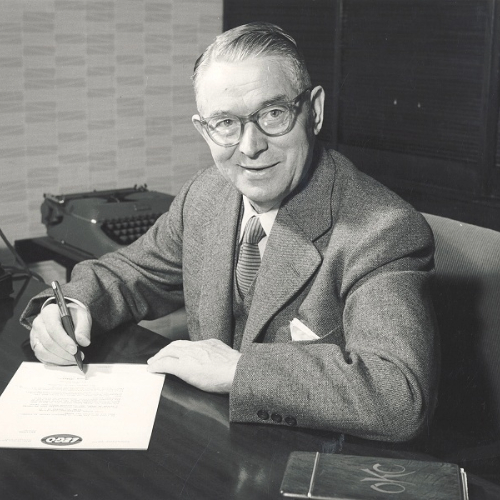
Photo: See page for author, Public domain, via Wikimedia Commons
Who He Is
Ole Kirk Christiansen was born in 1891 in the small village of Filskov, Denmark. One of ten children in a poor family, he began working as a farmhand at age six and developed a fascination with carving wood during long days tending sheep. At fourteen, he apprenticed under his older brother to learn carpentry. After earning his journeyman's certificate, he traveled abroad to work as a carpenter in Germany and Norway. In 1916, he returned to Denmark, bought a small carpentry shop in Billund, and began building houses and producing household goods like ladders, ironing boards, and milk stools for the local community.
Why He Matters
When the Great Depression devastated demand for his products, Christiansen made a pivotal decision: he began crafting small, affordable wooden toys. While his family urged him to give up toys and focus on practical goods, he refused. In 1934, he held a contest among his employees and chose the name LEGO, from the Danish words "Leg godt" ("play well"). He made his toys from birch wood, dried for two years and then kiln-dried for three weeks, finishing each one with three coats of varnish. His motto became "Only the best is good enough." Despite surviving two devastating factory fires, the loss of his wife, and near-bankruptcy, Christiansen kept building. In 1947, his company became the first toy manufacturer in Denmark to purchase a plastic injection molding machine, leading to the creation of the interlocking plastic bricks that would become the modern LEGO brick. Christiansen's story demonstrates how a carpenter's commitment to quality craftsmanship and refusal to give up can create something that inspires millions of children worldwide.