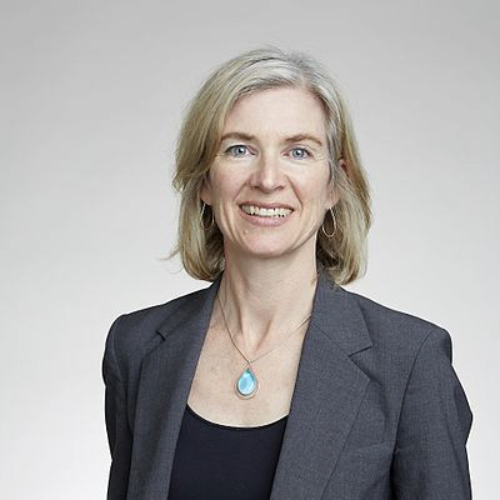
Photo: Beavercheme2, CC BY-SA 4.0 <https://creativecommons.org/licenses/by-sa/4.0>, via Wikimedia Commons
Who is She & What It Is
Jennifer Doudna is an American biochemist who grew up in Hilo, Hawaii, where a book about the discovery of DNA, left on her bed when she was in sixth grade, sparked her love of science. She became an expert in RNA, a close cousin of DNA, and in 2012 she and French scientist Emmanuelle Charpentier showed how a natural bacterial defense system called CRISPR could be turned into a tool for editing genes. CRISPR works like a pair of molecular scissors guided by a search tool, letting scientists find a specific spot in DNA and cut or change it. In 2020, Doudna and Charpentier won the Nobel Prize in Chemistry for their discovery.
Why They Matter
CRISPR has transformed genetics in just over a decade, making gene editing faster, cheaper, and more precise than ever before. In 2023, the United States approved the first CRISPR-based treatment to help people living with sickle cell disease. Scientists are also using CRISPR to study diseases, develop hardier crops, and explore new medicines. Doudna has spoken openly about the need to use this powerful tool responsibly, showing young people that great scientists think carefully about both what they can do and what they should do.