Photo: w_lemay, CC BY-SA 2.0 <https://creativecommons.org/licenses/by-sa/2.0>, via Wikimedia Commons
Who He Is
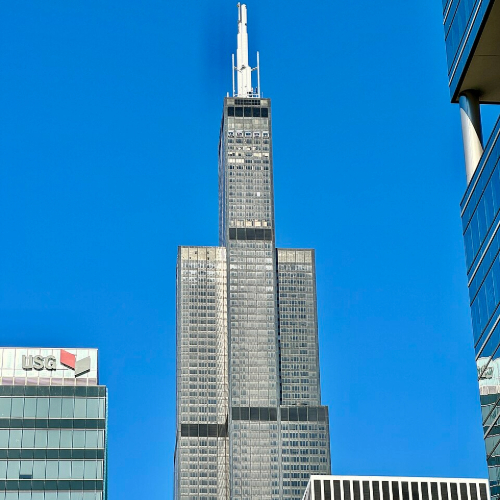
Fazlur Rahman Khan was a structural engineer and architect widely regarded as the father of the modern skyscraper. Born in 1929 in what is now Bangladesh, Khan immigrated to the United States to pursue advanced engineering studies at the University of Illinois. He joined the Chicago architecture and engineering firm Skidmore, Owings, and Merrill, where he fundamentally changed how tall buildings are designed. His most famous innovation, the tubular structural system, enabled skyscrapers to be built significantly taller and with far less steel than previous methods. Khan designed Chicago's John Hancock Center and the Willis Tower (formerly the Sears Tower), which was the world's tallest building for more than two decades. He also contributed to structural research that helped engineers worldwide build more efficiently and safely.
Why He Matters
Fazlur Khan changed the shape of city skylines and the entire science of how tall buildings stand up. His insight that a building could act as a hollow tube to resist wind forces was both elegant and revolutionary, proving that the most powerful engineering breakthroughs often come from rethinking something everyone else assumed was already figured out. Khan's career demonstrates that civil and structural engineering rewards creative thinking as much as technical precision. For young people interested in engineering, his story is a reminder that the field still has major problems waiting for someone with a fresh perspective to solve them.