

Did You Know?
About 90% of everything you buy has spent time on a cargo ship. From the clothes you wear to the food you eat, ocean shipping moves more goods around the world than any other form of transportation.
The Numbers Behind the Career
The 2024 median annual salary for supply chain managers was $102,010.
About 18,500 job openings are projected each year through 2034.
There were about 216,700 transportation, storage, distribution, and supply chain managers working in the U.S. in 2024.
Where This Career Is Headed
Supply chain management is undergoing a fundamental transformation driven by artificial intelligence, climate pressures, and geopolitical instability. The companies that dominated global supply chains by optimizing for lowest cost are now rebuilding their networks around resilience, sustainability, and speed. AI and machine learning are moving from experimental tools to core decision-making systems, enabling predictive analytics that can anticipate disruptions before they happen. Meanwhile, growing consumer expectations for fast, transparent delivery continue to push the industry toward ever-greater levels of sophistication.

AI-powered decision making: Supply chain managers who can leverage AI for demand forecasting, route optimization, and inventory management will command premium salaries as companies race to adopt these technologies across their operations.
Sustainability leadership: Growing regulatory requirements and consumer demand for environmentally responsible supply chains are creating new roles focused on reducing carbon footprints, circular-economy design, and sustainable sourcing.
Nearshoring and reshoring strategy: As companies move production closer to their customers to reduce risk and lead times, supply chain managers who can design and execute regional supply chain networks will be in high demand.

Education & Certification
Supply chain managers typically need at least a bachelor’s degree in supply chain management, business administration, logistics, or a related field. Many universities now offer dedicated supply chain management programs that combine coursework in operations, analytics, procurement, and global trade. Increasingly, employers prefer candidates with a master’s degree, particularly an MBA with a supply chain concentration, for senior management roles.
Professional certifications can significantly boost career prospects and earning potential. The most recognized credentials include the APICS Certified Supply Chain Professional (CSCP), the Certified in Production and Inventory Management (CPIM), and the ISM Certified Professional in Supply Management (CPSM). As the field becomes more technology-driven, many supply chain managers also benefit from certifications in project management (PMP) or data analytics.
To Prepare...
Take math, business, economics, and computer science classes in high school. Understanding data analysis, spreadsheets, and basic programming provides a strong foundation for supply chain work.
Develop organizational and leadership skills by managing group projects, planning school events, or running a small business like an online store. Real experience coordinating people and resources is directly relevant.
Research supply chain management programs at universities and explore internship opportunities with logistics companies, retailers, or manufacturers. Many companies offer summer programs specifically for students interested in operations and supply chain careers.
Spotlight: Explore the Life of a Supply Chain Manager



Explore more resources for a future Supply Chain Manager

The Making of the Supply Chain: How Five CSCMP Supply Chain Hall of Famers Shaped the Industry
van Hoek, Remko
Why We Picked It
Career Connection
Supply chain managers build on decades of innovations by the pioneers this book profiles, and understanding how each breakthrough in transportation, inventory, and distribution reshaped commerce gives aspiring practitioners the historical context the field is built on.
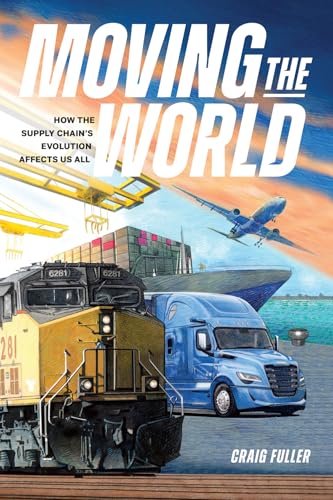
Moving the World: How the Supply Chain's Evolution Affects Us All
Fuller, Craig
Why We Picked It
Career Connection
Supply chain managers keep the flow of goods running despite constant disruption risks, and this book's vivid account of how supply chain breakdowns affect communities, businesses, and the broader economy makes the stakes of good supply chain management genuinely clear.

Transportation: A Global Supply Chain Perspective
Novack, Robert | Gibson, Brian | Suzuki, Yoshinori | Coyle, John
Why We Picked It
Career Connection
Supply chain managers must understand transportation economics, carrier relationships, and the trade-offs between cost, speed, and reliability, and this comprehensive textbook gives serious students the analytical foundation for making those decisions professionally.