

Did You Know?
A single large hospital pharmacy may manage an inventory of over 3,000 different medications and fill more than 1,000 prescriptions per day, with systems designed so that every dose is checked multiple times before reaching a patient.
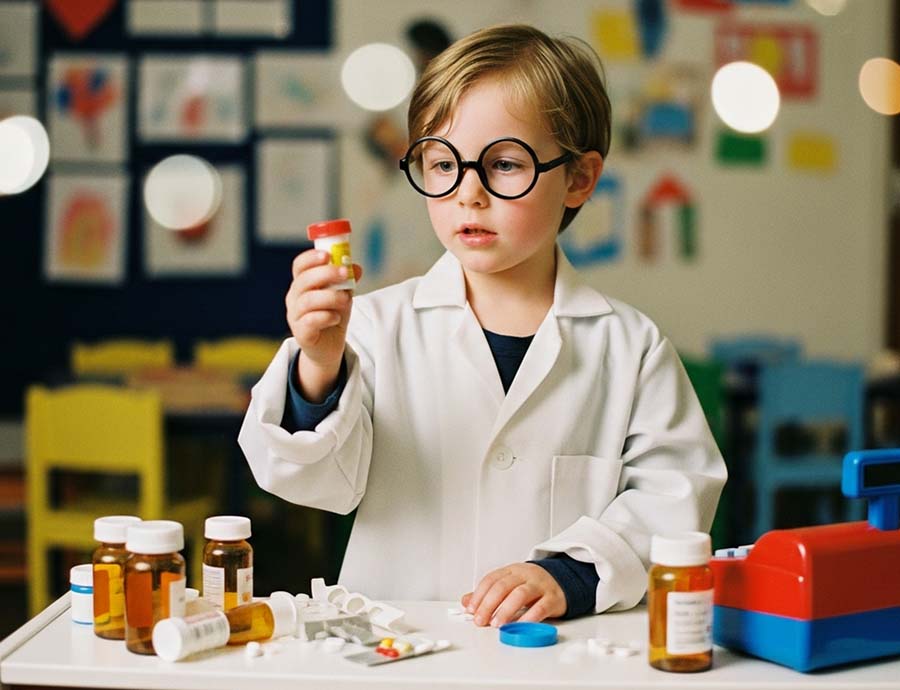
What Pharmacists Really Do
You are standing behind the pharmacy counter, surrounded by shelves that stretch from floor to ceiling, each one packed with hundreds of bottles and boxes of medicine. A prescription comes in for a little boy with an ear infection, and it is your job to find exactly the right medicine, measure the precise dose, and make sure it will not cause any problems with anything else he is taking. You check the computer, read the label twice, and carefully prepare the bottle. When his mom comes to pick it up, you explain how to give it to him and what to watch for. You are a pharmacist, and the work you just did will help that little boy feel better by tomorrow morning.
Thinking as a pharmacist starts with curiosity about how things affect your body. Why does one medicine make a headache go away while another helps with a stomachache? How does your body know what to do with a pill after you swallow it? Pharmacists love figuring out how chemicals interact with living things, and they pay close attention to details because even small mistakes can matter. If you are someone who asks questions about how medicines work, enjoys science, and likes helping people feel better, you are already thinking the way pharmacists think.
You Might Love This If...

Skills That Follow You Everywhere
Being a pharmacist builds skills that extend far beyond the pharmacy counter. Pharmacists learn to analyze complex information under time pressure, communicate clearly with people from all backgrounds, and approach every patient interaction with genuine care. These abilities are valuable in any career that demands scientific thinking, trust, and human connection.
Critical Thinking
Every prescription a pharmacist reviews requires careful analysis. Is the dose appropriate for this patient's age, weight, and medical history? Could this medication interact with something else they are taking? Does the prescribed treatment align with current clinical guidelines? Pharmacists evaluate these questions dozens or even hundreds of times a day, often catching errors or risks that would otherwise reach the patient undetected. This habit of questioning, verifying, and thinking through consequences builds a powerful critical thinking discipline in any field where decisions carry real stakes.
Communication
Pharmacists translate complex medical and chemical information into plain language that patients can understand and follow. A patient picking up a new prescription needs to know not just how many pills to take, but why the timing matters, what side effects to watch for, and what foods or other medications to avoid. Getting this wrong can mean a patient skips doses, mixes drugs dangerously, or stops treatment too early. Strong communication helps pharmacists build trust with patients, collaborate effectively with doctors and nurses, and ensure that the science behind a prescription actually leads to better health.
Empathy
Pharmacists often interact with people during some of the most stressful moments of their lives, whether it is a new diagnosis, a medication that is not working, or the challenge of managing a chronic illness. A patient who feels heard and understood is more likely to ask important questions, follow their treatment plan, and come back when something does not feel right. Empathy allows pharmacists to see beyond the prescription to the person holding it, and that human connection is often what makes the difference between a medication that sits in a cabinet and one that actually helps someone heal.
Explore more resources for a future Pharmacist

Tu Youyou: The Woman Who Found a Cure for Malaria. How Ancient Remedies Led To A Breakthrough That Saved Millions Of Lives. (Unsung Heroes of Science)
Blake, Jonathan
Why We Picked It
Career Connection
Pharmacists identify, isolate, and validate compounds that treat disease safely and effectively, and Tu Youyou's systematic search through traditional medicine records to find and purify artemisinin follows exactly the scientific process at the heart of pharmaceutical discovery.

Pharmacy Girl: The Great War, Spanish Influenza, and the Truth about Billy Detwiler
Szegda, Kate
Why We Picked It
Career Connection
Pharmacies are often at the center of their communities' health responses, and Josie's family drugstore, where her pharmacist father watches a pandemic arrive with growing alarm, shows how pharmacies and pharmacists have always served as both medicine providers and community anchors in times of crisis.

Tu Youyou And The Discovery Of Artemisinin: 2015 Nobel Laureate In Physiology Or Medicine
Rao, Yi
Why We Picked It
Career Connection
Pharmacists work within research and clinical teams to develop and validate drug treatments, and this book's detailed account of how artemisinin was identified, tested, and validated reveals the full collaborative, systematic process behind a major pharmaceutical breakthrough.