
Did You Know?
A tsunami crossing the open ocean is usually less than three feet tall, so ships sail right over one without noticing. The danger comes from its length, since a single wave can stretch for hundreds of miles.
What Oceanographers Really Do
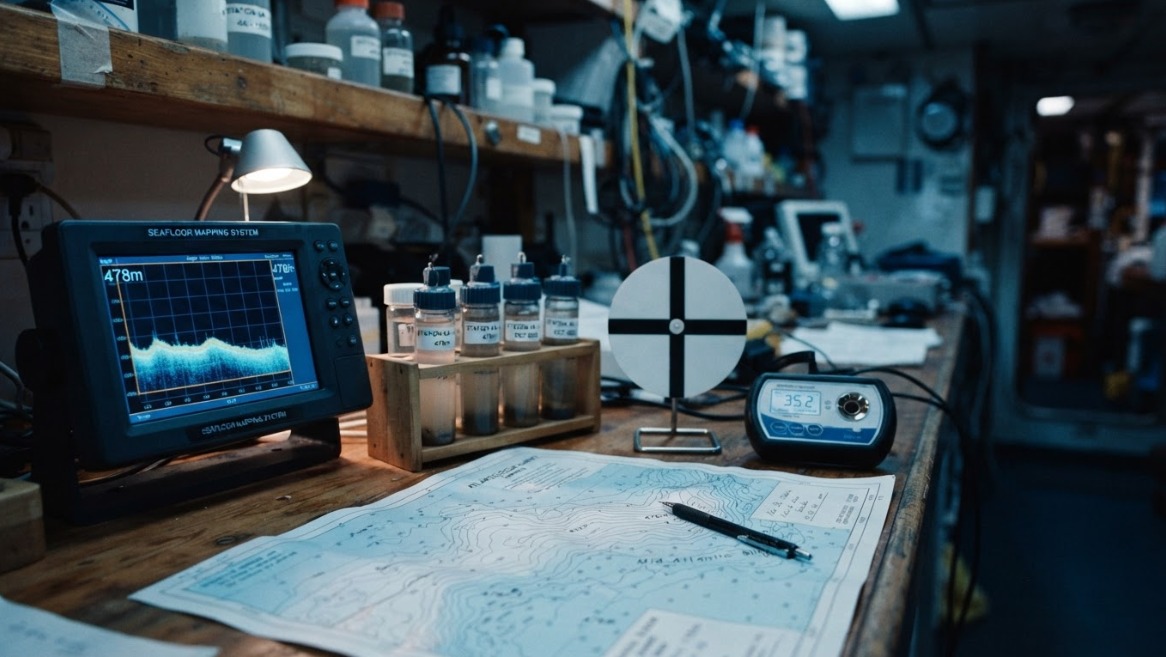
You’re standing on the deck of a research ship, watching a crew lower a strange-looking instrument over the side on a long cable. It beeps steadily as it sinks, measuring how salty, warm, and deep the water is at every single point on its way down. A screen nearby fills with numbers and colors, building an invisible map of water nobody can actually see. Somewhere miles below the ship, that same water is moving in slow, powerful currents that stretch across entire oceans. Figuring out how all of that works is exactly what an oceanographer does.
Oceanographers are scientists who study the ocean itself: its water, waves, currents, and seafloor. Some oceanographers study the living things in the sea, but many focus on how the ocean moves, why some parts are saltier or warmer than others, and what’s hiding on the dark floor far below. Some spend weeks on research ships far from land, while others work in labs studying samples and data brought back from the water. Their work helps us understand everything from why storms form to how the whole planet’s climate stays balanced. If you’re curious about what’s happening in water you can’t see to the bottom of, and you like puzzles made of invisible forces, you might already be thinking like an oceanographer.
You Might Love This If...
Skills That Follow You Everywhere
Oceanographers develop skills that extend well beyond reading instruments and collecting data. They learn to separate a real signal from random noise in enormous datasets, to work through complex problems that can take years to solve, and to keep decades of continuous information organized and usable. Those abilities carry over into any career that depends on long-term data, patient analysis, and careful record-keeping.
Critical Thinking
A single unusual reading, like a patch of warmer water, could be a real climate signal or just normal variation that happens every year. Oceanographers have to weigh new data against years of historical records before deciding whether something is actually significant. Jumping to conclusions too quickly, or dismissing a real pattern as noise, can both lead research in the wrong direction for years.
Problem-Solving
Questions like why a major ocean current is slowing down rarely have an obvious answer, and solving them means combining evidence from completely different sources, like satellite images, deep-sea sensors, and decades-old temperature records. Oceanographers have to build a case piece by piece, often revising their thinking as new data comes in. The best answers in this field usually come from connecting evidence nobody had thought to combine before.
Organization
A single long-term research project might involve data collected continuously for decades, from hundreds of sensors, ships, and satellites all feeding into the same analysis. Losing track of how or when a piece of data was collected can make it useless, since tiny details about timing and location matter enormously in ocean research. Staying organized across projects that outlast any single person’s career is simply part of how the work gets done.