
Did You Know?
A hard drive found charred in the wreckage of the space shuttle Columbia still gave up about 99 percent of its data. Recovery experts pulled the results of a science experiment off it, and the findings were later published.

What Digital Forensics Analysts Really Do
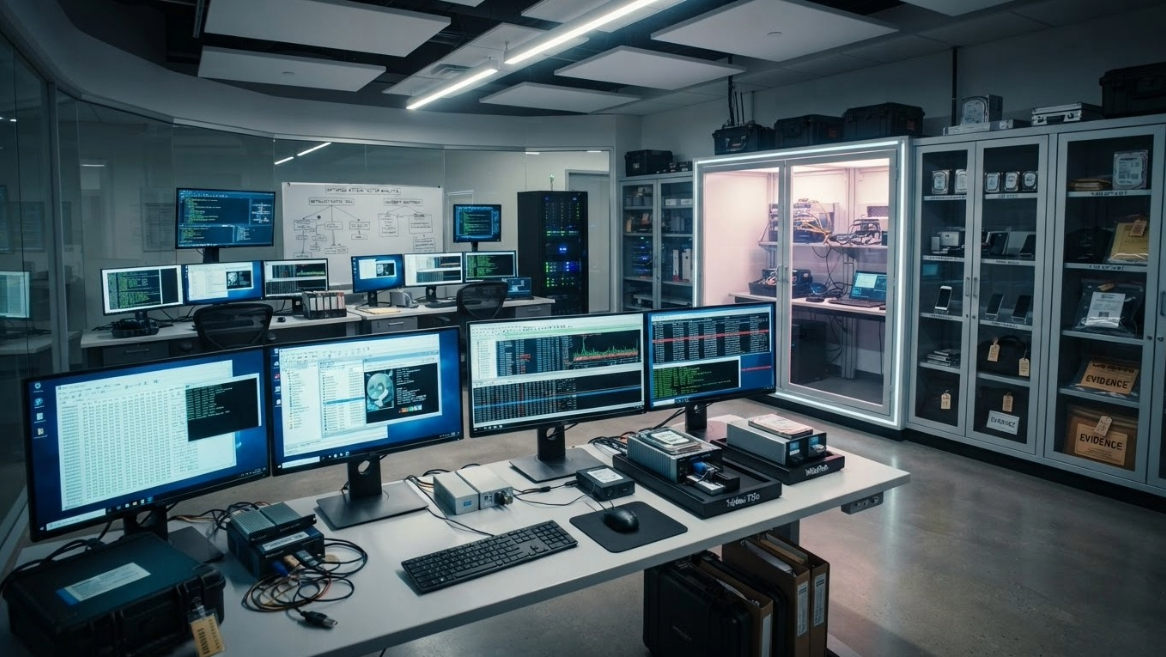
A tablet sits on your lab table in a clear, labeled bag, and a school has asked you to find a drawing that vanished from it. First, you write down who handed it to you and what time, because every step has to be recorded. Then you connect the tablet to special tools that copy its contents while changing as little as possible. On your screen, you spot a list of deleted files, and one is a picture of a purple dragon from last Tuesday. You copy it, check that the copy is exact, and write in your notebook exactly what you did.
A digital forensics analyst finds, protects, and studies evidence stored on phones, computers, tablets, and online accounts. They use special tools to make careful copies, so the original stays as safe and unchanged as possible. Then they search the copy for clues, like deleted files, photos, messages, or records of what a device did and when. They write down every step, so anyone can see that the results can be trusted. If you love solving mysteries, keeping careful notes, and finding out how computers work, you may already be thinking like a digital forensics analyst.
You Might Love This If...

Skills That Follow You Everywhere
Digital forensics analysts handle evidence that a single careless click can change, which shapes the habits they build. They learn to keep perfect records, to separate what they can prove from what they only suspect, and to explain their findings so others can act on them. These abilities matter in any job where people need to trust your work.
Critical Thinking
A deleted message or a photo’s date does not prove what it seems to, so an analyst asks where it came from, whether it was edited, and what else could explain it. They check each finding against other evidence, such as a second log or a different device, before saying it is true. Weighing evidence carefully and saying only what the facts support is a skill that helps in any job where conclusions have to hold up when someone challenges them.
Communication
An analyst’s findings are only useful if the people who need them can understand them, so they write detailed reports that another expert could repeat step by step. They also explain the same results in plain language to lawyers, managers, or a jury who have never seen the inside of a computer. Making complex ideas clear without overstating what the evidence shows is a skill that helps in any job where people have to act on what you tell them.
Organization
Every device an analyst receives gets a record of who handled it, when, and what was done, called a chain of custody, because one missing entry can make evidence hard to use. Analysts also decide what to collect first, such as memory that vanishes when power is cut, and they label each copy and log each step so another person could follow their work exactly. Planning ahead and keeping every detail in order is a skill that helps in any job where accuracy and accountability matter.