
Did You Know?
About 70 to 80 percent of the salmon caught in the Pacific Northwest, and nearly a quarter of those caught in Alaska, started their lives in a hatchery.

What Aquaculture Technicians Really Do
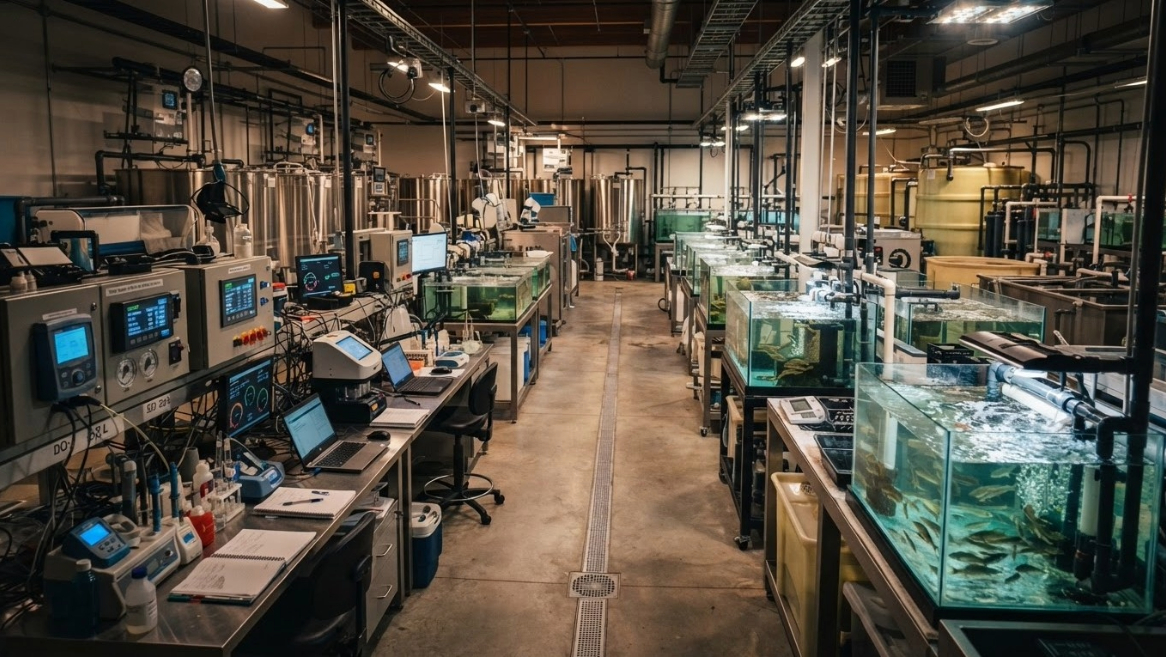
You’re standing beside a long, shallow tank in a building that smells like a creek, holding a bucket of tiny fish pellets. Thousands of baby trout, each about as long as your finger, dart toward the surface as you scatter the food, and the water boils with silver flashes. Before you fed them, you dipped a meter into the tank to check that the water was cold enough and had enough oxygen, and you wrote the numbers on a clipboard, just like you do every morning. In a few months these fish will be big enough to release into a river or send to a farm that raises them for food. Every one of them is alive today because someone checked that water.
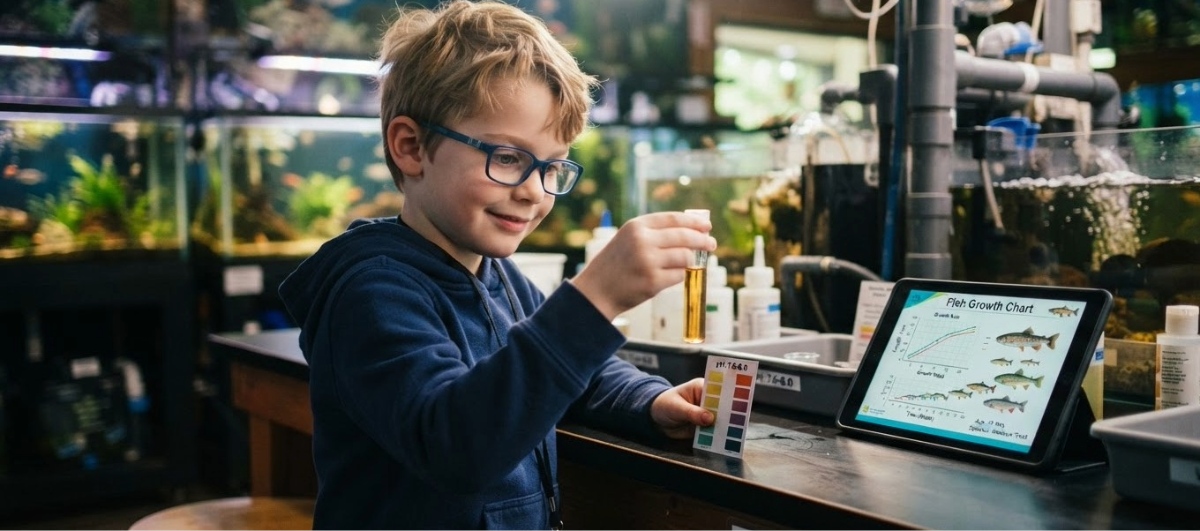
An aquaculture technician is someone who raises fish, shellfish, and water plants the way other farmers raise cows or corn. They work at fish hatcheries, oyster farms, shrimp farms, and even indoor buildings full of tanks, feeding the animals, cleaning the water, and watching closely for signs that something is wrong. A big part of the job is testing the water, because fish can get sick fast if the temperature, oxygen, or cleanliness is off. Technicians also count fish, move them between tanks as they grow, and keep careful records of everything. If you like animals, being around water, and taking care of living things every single day, you might already be thinking like an aquaculture technician.
You Might Love This If...
Skills That Follow You Everywhere
Aquaculture technicians build habits that stretch far beyond the hatchery or the farm. They learn to keep hundreds of small details organized so nothing slips, to trace a problem back to its real cause before it spreads, and to adjust quickly when weather, equipment, or the animals themselves change the plan. Those abilities transfer to any career where living things, equipment, and schedules all have to be managed at once.
Adaptability
A storm can knock out power, a heat wave can push water temperatures past what a species can handle, and a shipment of young fish can arrive a week early. Aquaculture technicians constantly adjust feeding, water flow, staffing, and schedules around conditions they don’t control. Being able to change the plan without losing sight of what the animals need is what keeps a farm running through a bad week.
Problem-Solving
When fish stop eating or oxygen readings drop, there is rarely one obvious cause. It could be the water, the feed, a disease, a failing pump, or a sensor that simply needs cleaning. Technicians have to work through the possibilities in order, checking the simple explanations first, and act before a small problem turns into a lost crop. The job rewards people who stay curious and methodical under pressure.
Organization
A single farm might have dozens of tanks, pens, or cages, each at a different stage of growth with its own feeding schedule, water readings, and treatment history. Technicians keep records on all of it, every day, because a missed reading or a mislabeled tank can hide a problem until it’s too late to fix. Learning to track many moving parts at once, and to write things down so the next shift can pick up where you left off, is central to the work.