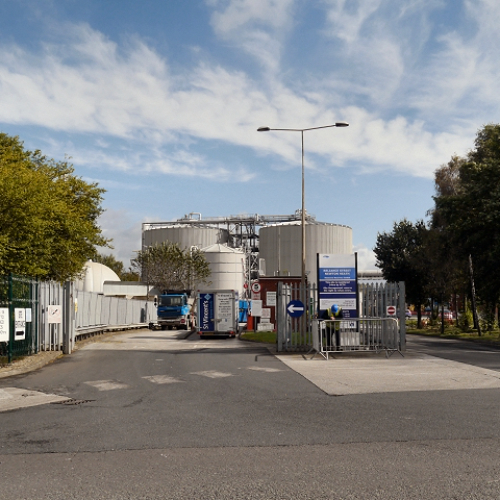
Photo: Newton Heath Resource Recovery Centre by David Dixon, CC BY-SA 2.0 <https://creativecommons.org/licenses/by-sa/2.0>, via Wikimedia Commons
Water Reuse and Resource Recovery
What It Is
Today, more treatment plants are becoming "water resource recovery facilities" that do much more than merely clean wastewater. They generate renewable energy by capturing methane gas produced during treatment, extract nutrients like phosphorus and nitrogen and convert them into fertilizer, and in many communities purify treated wastewater to drinking water standards. The Orange County Water District in Southern California manages the world's largest advanced water purification system, recycling about 100 million gallons of wastewater daily.
Why It Matters
Water reuse and resource recovery are shaping the future of this field. As climate change worsens droughts and populations grow, the role of water and wastewater professionals is evolving from operators to environmental stewards. For young people considering this career, resource recovery shows that wastewater treatment is not a static, behind-the-scenes utility job — it is a profession at the forefront of society's approach to water, energy, sustainability, and the circular economy.