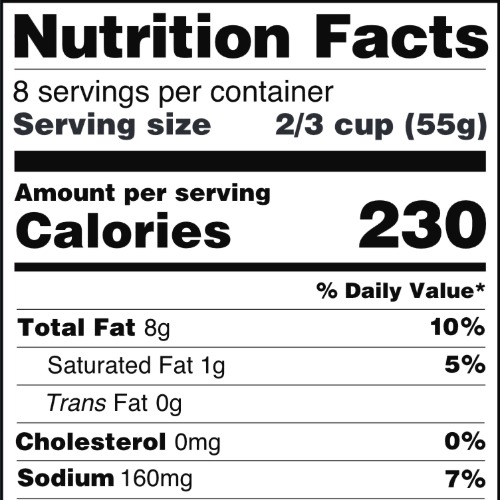
Photo: U.S. Food and Drug Administration, Public domain, via Wikimedia Commons
What It Is
The Nutrition Facts label is the black-and-white box found on almost every packaged food in the United States. It became required on most packaged foods after Congress passed the Nutrition Labeling and Education Act in 1990, and the familiar label first appeared on grocery shelves in 1994. The label lists the serving size, calories, and nutrients like protein, fiber, sodium, and vitamins, so shoppers can compare foods side by side. In 2016, the U.S. Food and Drug Administration (FDA) updated the design with larger type for calories, more realistic serving sizes, and a new line showing added sugars. Nutrition scientists and health experts helped shape what the label includes and how it looks.
Why It Matters
The Nutrition Facts label puts useful nutrition information into the hands of millions of shoppers every day. Dietitians use it as one of their favorite teaching tools, helping kids and adults learn to read labels, compare products, and make choices that fit their needs. For people managing conditions like diabetes or heart disease, knowing how to read a label can be an important part of staying healthy. For young people curious about nutrition, the label is a free, everyday science lesson printed right on the cereal box.