Photo: Himesh23, CC BY-SA 4.0 <https://creativecommons.org/licenses/by-sa/4.0>, via Wikimedia Commons
What It Is
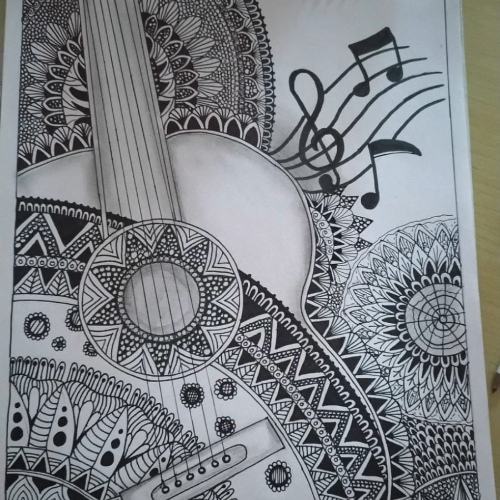
A mandala is a design built around a circle, with patterns, shapes, or colors arranged outward from the center. The word comes from the ancient Sanskrit word for “circle,” and mandalas appear in many cultures, including the sand mandalas made by Tibetan Buddhist monks. In 1918 and 1919, the Swiss psychiatrist Carl Jung drew a small circular design in a notebook every morning and felt that each one matched what was going on inside him at the time. He later studied similar circle drawings made by his patients and came to see the form as a picture of inner order. Art therapists still use mandalas today, often by giving a client a circle to fill with colors and shapes of their own choosing.
Why It Matters
A circle gives a person a clear edge to work within, which can make an open-ended task feel safer to begin. That structure can help clients who find a blank page overwhelming. In one small study, college students who colored a mandala or a detailed plaid pattern felt less anxious afterward than students who colored freely on a blank page, which suggests the structure itself may be part of what helps, although the research is still developing. Mandalas also require no artistic skill, so a person can take part without worrying about whether the result looks good. The same simple circle can serve as the first step in a session or the center of a longer project, which makes it one of the most flexible tools in the field.