Photo: Federal Theatre Project, Public domain, via Wikimedia Commons
Who She Is
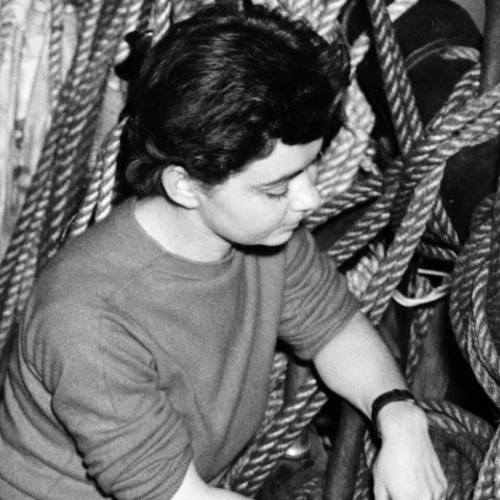
Jean Rosenthal was born Eugenia Rosenthal on March 16, 1912, in New York City, to Romanian-Jewish immigrant parents who were both physicians. She struggled in traditional school settings but found her path when she enrolled at the Neighborhood Playhouse School of the Theatre. There, she studied with Martha Graham and began to realize the power of light as a storytelling tool. In 1937, at just twenty-five years old, she became the technical director for Orson Welles's legendary Mercury Theatre company. It was there, working on Welles's famous bare-stage production of Julius Caesar, that Rosenthal started developing the techniques that would forever change how light was used in live performance.
Why She Matters
Before Rosenthal, theatrical lighting was often considered an afterthought, usually handled by the set designer or a house electrician. She transformed it into a respected artistic field with its own principles and professional practices. Throughout her career, she lit over 300 Broadway productions, including West Side Story, The Sound of Music, Fiddler on the Roof, Hello, Dolly!, and Cabaret. She collaborated with Martha Graham for 37 years, creating the famous diagonal shaft of light known as "Martha's Finger of God," which became a standard in dance lighting worldwide. Rosenthal pioneered the use of boom lighting from the sides of the stage, developed systematic paperwork methods that still form the foundation of professional lighting documentation, and introduced the idea that light should sculpt a performer's body in three dimensions rather than just illuminate them from the front. She said, "Light is quite tactile to me. It has shape and dimension." She overcame significant sexism and antisemitism in a male-dominated field, founded her own companies (Theatre Production Service in 1940 and Jean Rosenthal Associates in 1958), and continued working until just weeks before her death from cancer at age 57. She designed her final Martha Graham piece from a wheelchair. Her posthumous memoir, The Magic of Light (1972), remains an important resource for lighting professionals.