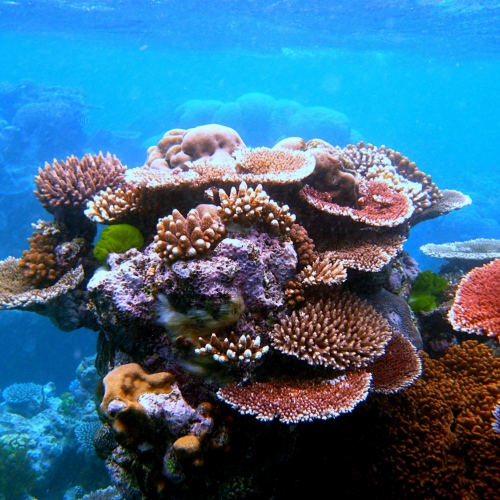
Photo: Toby Hudson, CC BY-SA 3.0 <https://creativecommons.org/licenses/by-sa/3.0>, via Wikimedia Commons
Overview
Coral IVF is a technique marine biologists developed to help damaged coral reefs recover faster than they could on their own. Scientists collect coral eggs and sperm during the reef's once-a-year spawning event, fertilize them in floating pools set up right above the reef, and then release millions of resulting coral larvae onto damaged sections of reef where they can settle and grow. The technique was developed by Australian marine biologist Peter Harrison, whose team ran the first reef trials in the Philippines in 2013 before bringing the method to Australia's Great Barrier Reef, where sections devastated by heat waves and bleaching needed help recovering faster than natural reproduction alone could provide. Early trials have shown coral larvae successfully settling and growing on reef sections that had been severely damaged.
Why It Matters
Coral reefs support about a quarter of all marine life despite covering less than 1% of the ocean floor, which means their health affects far more species than just coral. Coral IVF represents a hopeful example of marine biologists actively intervening to help ecosystems recover, rather than only monitoring their decline. It connects directly to the kind of assisted evolution research shaping the future of the field, showing students that marine biology is not just about observing the ocean but about actively helping it heal.