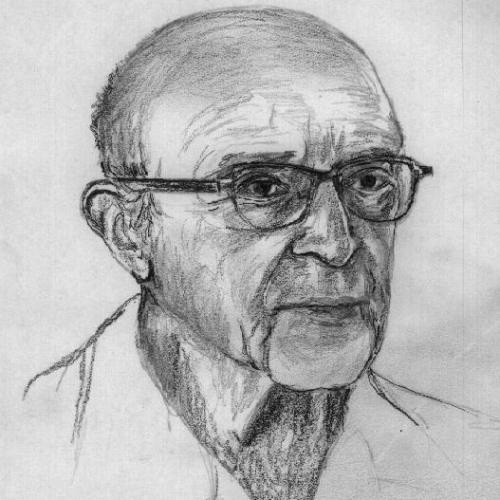
Photo: The original uploader was Didius at Dutch Wikipedia., CC BY 2.5 <https://creativecommons.org/licenses/by/2.5>, via Wikimedia Commons
Overview
Carl Rogers was an American psychologist whose ideas helped shape modern counseling. He was born in Oak Park, Illinois, in 1902. After college, he studied at a seminary before earning his master's and doctoral degrees from Teachers College, Columbia University. In his 1942 book Counseling and Psychotherapy, he argued that people can work through their own problems when a counselor truly listens and accepts them without judgment. He first called his approach "non-directive" and later "client-centered" and "person-centered" therapy. Rogers and his colleagues recorded real counseling sessions so they could study and improve how counselors listen, and researchers were analyzing recordings of his sessions as early as 1941. He was elected president of the American Psychological Association in 1947, and his 1961 book On Becoming a Person became one of his best-known. He died in 1987 at age 85.
Why He Matters
Carl Rogers changed the counselor's role from an expert who gives advice to a partner who listens. He believed people grow when they feel truly understood and accepted, an idea he called "unconditional positive regard." A 1982 survey of psychologists in the United States and Canada named him the most influential psychotherapist in history. In his later years, Rogers took his listening skills around the world, leading conversations between Protestants and Catholics in Northern Ireland and between Black and white South Africans, and bringing together leaders from 17 nations at a 1985 peace workshop in Austria. For young people interested in counseling, his life shows that careful listening and empathy can help one person, and sometimes even whole communities, heal.