

Did You Know?
Computers only understand two numbers: 0 and 1. Everything you see on a screen, every game you play, and every app you use is built from combinations of just these two digits, called binary code.
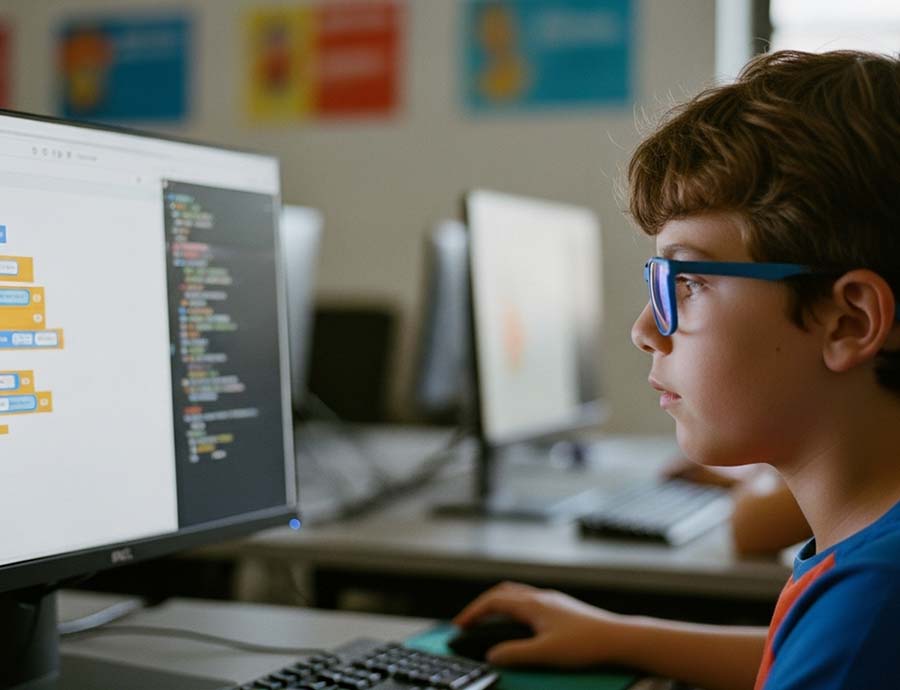
What Software Devs Really Do
Have you ever wondered how your favorite video games, apps, and websites work? Software developers are the people who create them! They write special instructions called code that tell computers what to do. Just like you might follow a recipe to bake cookies, developers write step-by-step instructions that computers follow to make programs run.
Imagine creating your own video game where characters jump and collect coins, building an app that helps people learn new things, or making a website where friends can share stories. Software developers get to bring their ideas to life using the language of computers. They solve puzzles every day and get to be creative while making technology that millions of people use. If you like solving problems, being creative, and figuring out how things work, you might love being a software developer!
You Might Love This If...

Skills That Follow You Everywhere
Being a software developer helps you build important skills that are useful across many careers, such as problem-solving, attention to detail, and creativity. Developers learn how to analyze complex challenges, pay close attention to small details that matter, and imagine new ways to solve problems. These skills are especially important in a developer's everyday work, where writing code, debugging errors, and designing user experiences all play a big role.
Critical Thinking
Before a developer writes a single line of code, they must evaluate what the software actually needs to do, who will use it, and the trade-offs different approaches entail. Choosing between speed and security, simplicity and flexibility, or building something custom versus using an existing tool requires weighing competing priorities and anticipating consequences that may not be obvious at first. That habit of thinking through decisions before committing to them, rather than jumping to the first idea, strengthens judgment in any field.
Creativity
Software development is often viewed as purely technical, but every application, game, and website begins as someone's idea for how technology could solve a problem or create an experience that did not exist before. The best developers do not just write code that functions; they design interactions that feel intuitive, find elegant shortcuts that simplify complex processes, and imagine possibilities that no one has built yet. That ability to look at a blank screen and envision something new is the same creative instinct that drives artists, architects, and inventors.
Problem-Solving
Software developers spend most of their time figuring out why something is not working and how to fix it. A single missing character in thousands of lines of code can cause an entire application to fail, and tracking it down requires methodically isolating variables, testing assumptions, and ruling out possibilities until the root cause is found. That disciplined process of working through frustration to reach a solution, rather than guessing or giving up, is one of the most valuable habits any profession can build.
Explore more resources for a future Software Dev

Grace Hopper and the Invention of the Information Age (Lemelson Center Studies in Invention and Innovation series)
Kurt W. Beyer
Why We Picked It
This deeply researched biography reveals how Grace Hopper's vision and persistence helped create the first computer compilers, fundamentally changing how humans communicate with machines.
Career Connection
Hopper invented the concept of machine-independent programming languages, and every developer who writes code in Python, Java, or any modern language builds on the foundation her work established.

Who Is Bill Gates? (Who Was?)
Patricia Brennan Demuth
Why We Picked It
This fast-paced biography shows how a computer-obsessed kid turned big ideas, relentless curiosity, and coding talent into one of the most transformative technology companies in history.
Career Connection
Gates wrote his first software program in middle school, showing kids that professional developers start building real skills years before college — and that early coding practice creates lasting career advantages.

The Pragmatic Programmer: Your Journey To Mastery, 20th Anniversary Edition (2nd Edition)
David Thomas and Andrew Hunt
Why We Picked It
Short, conversational tips teach aspiring coders how to think like software craftspeople — debug early, automate often, and never stop learning — through relatable real-world anecdotes.
Career Connection
Senior developers mentor juniors on best practices like version control, testing, and continuous improvement, and this book packages that same mentorship wisdom into actionable daily habits.