Industry Facts
The 2024 median annual wage for airline pilots was $226,600. Pilots early in their career can expect to earn significantly less.
About 18,200 pilot job openings are projected annually over the next decade.
According to the Bureau of Labor Statistics, there were about 155,400 airline and commercial pilot jobs in the U.S. in 2024.
Future Trends
The aviation industry is entering a period of significant transformation driven by pilot shortages, sustainability mandates, and advancing technology. Airlines worldwide are projected to need hundreds of thousands of new pilots over the next two decades as experienced aviators retire faster than new ones enter the pipeline. Sustainable aviation fuels, electric and hybrid-electric aircraft, and urban air mobility vehicles are moving from concept to reality. Artificial intelligence and advanced automation are expanding the capabilities of cockpit systems, changing how pilots interact with technology while keeping human judgment at the center of flight safety.
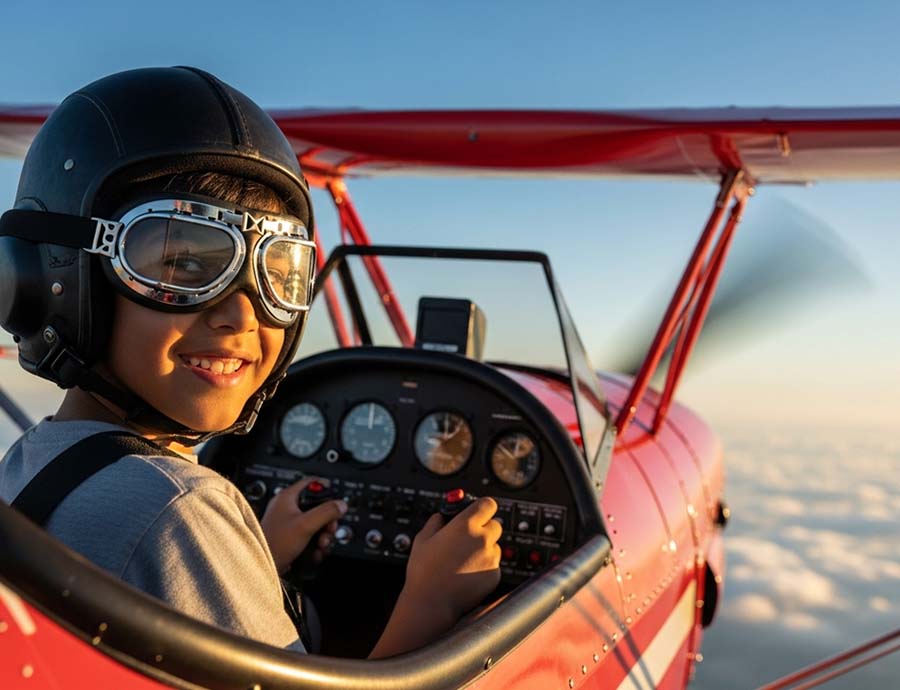
A projected global pilot shortage will create strong demand and competitive compensation as airlines and cargo carriers recruit aggressively over the next decade.
Electric and hybrid-electric aircraft will open new career paths in regional aviation, urban air mobility, and short-haul passenger service.
Growth in private aviation, charter services, corporate flight departments, and drone operations will diversify career options beyond traditional airline flying.
Explore more resources for a future Pilot:

Education & Certification
Most airline pilots follow a structured path that begins with earning a private pilot certificate and progresses through instrument, commercial, and multi-engine ratings before earning the Airline Transport Pilot (ATP) certificate, which is required to serve as a captain on a commercial airline. Flight training can be completed through FAA-certified flight schools, university aviation programs, or military service. Universities like Embry-Riddle Aeronautical University, the University of North Dakota, and Purdue offer degrees in aeronautical science or professional flight that integrate flight training into the curriculum, and graduates of FAA-approved programs can qualify for reduced ATP flight hour minimums. Most major airlines require a bachelor's degree, though no specific major is required, and pilots hold degrees in fields ranging from aerospace engineering and physics to business and liberal arts. Military pilots transitioning to civilian aviation bring extensive training and flight experience that is highly valued by airlines and corporate flight departments.
Beyond the ATP certificate, pilots must pass regular medical examinations and complete recurrent training and check rides to maintain their qualifications. Specialized ratings, such as type ratings for specific aircraft, are earned as pilots advance to larger, more complex aircraft.
To Prepare...
Take classes in math (especially algebra and trigonometry), physics, and geography to build the analytical and spatial reasoning skills that support flight training, navigation, and understanding weather systems.
Study aviation concepts through elective courses in aerospace, engineering, or technology if your school offers them, and look into dual enrollment programs at community colleges that provide introductory coursework in aviation or aeronautical science.
Research university aviation programs, ROTC options, and military academy pathways early to understand admissions requirements, scholarship opportunities, and how your high school course selections can position you for competitive flight training programs.