

Did You Know?
A single lightning bolt carries enough energy to power a small home for about a month, and electricians work with systems designed to safely manage and distribute that same amount of energy (and more), but on a more controlled scale.
What Electricians Really Do
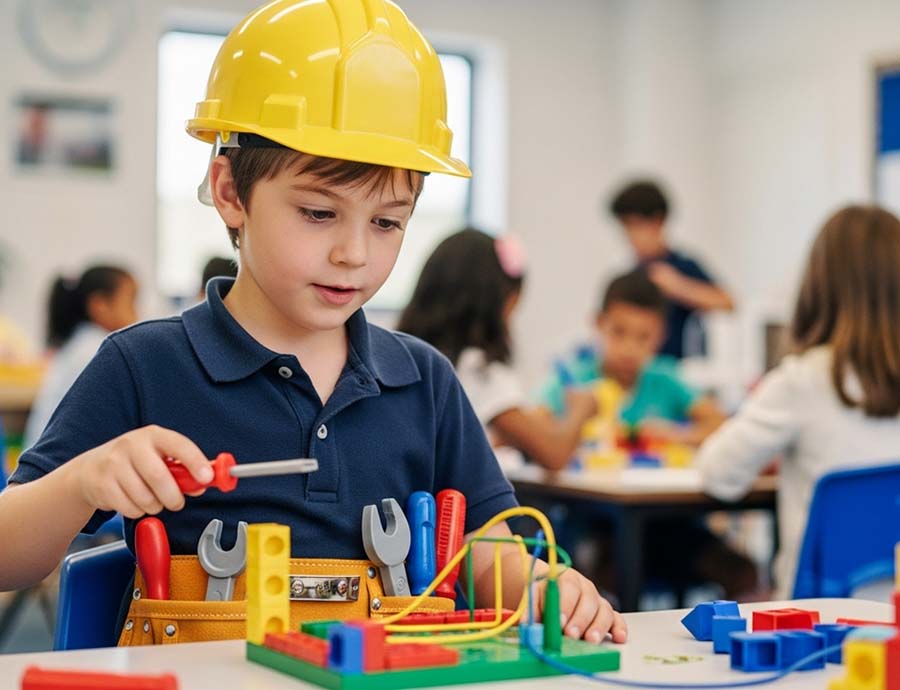
Imagine flipping a light switch and watching a dark room fill with light. It seems simple, but behind that switch is a hidden network of wires running through the walls, all carefully installed by an electrician. Now imagine being the person who put that whole system together, making sure the lights work, the outlets are safe, and everything runs smoothly. That is what electricians do every day. They are the people who make electricity flow safely into our homes, schools, and hospitals so that everything we depend on actually works.
Thinking like an electrician starts with curiosity about how things work. Why does flipping a switch turn on a light? What happens when the power goes out? How do batteries store energy? Electricians love figuring out how things connect and solving puzzles. If you enjoy taking things apart to see what is inside, building circuits with snap kits, or wondering what those wires on the power lines outside actually do, you are already thinking the way electricians think.
You Might Love This If...
Skills That Follow You Everywhere
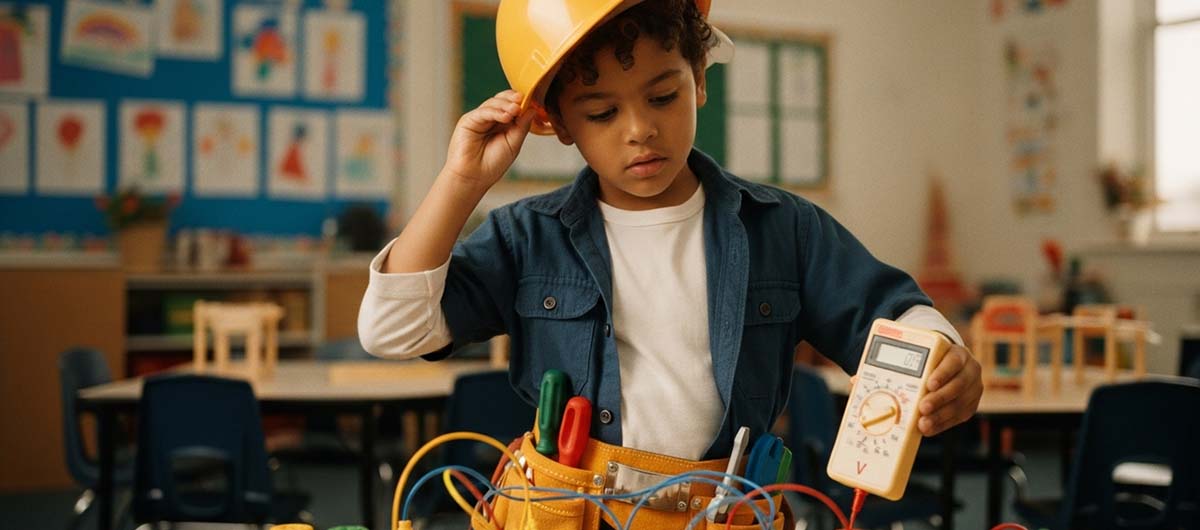
Being an electrician develops skills that go well beyond wiring and circuits. Electricians learn to think critically under pressure, communicate effectively with clients and colleagues, and solve complex problems in real time. These abilities are valuable in any career, business, or leadership role.
Critical Thinking
Every electrical installation requires careful planning and analysis. Electricians must read complex blueprints, calculate electrical loads, select appropriate materials, and ensure compliance with the National Electrical Code. A mistake in any of these steps can create safety hazards or costly rework. Critical thinking allows electricians to anticipate problems before they happen, evaluate options under time pressure, and make sound decisions when the stakes are high.
Problem-Solving
Electricians face diagnostic challenges daily. A circuit that keeps tripping, a fixture that will not power on, a system that works intermittently: each problem requires methodical thinking and hands-on investigation. Electricians learn to gather information, test hypotheses, and eliminate possibilities until they find the root cause. This kind of structured problem-solving builds a mindset that is useful across fields, from engineering to business management.
Communication
Electricians rarely work in isolation. On a job site, they coordinate with general contractors, plumbers, HVAC technicians, and inspectors. In residential work, they explain technical issues to homeowners in plain language. Master electricians mentor apprentices, passing along knowledge and guiding the next generation. Strong communication skills help electricians build trust with clients, avoid misunderstandings on complex projects, and advance into leadership and management roles.
Explore more resources for a future Electrician

VIP: Lewis Latimer: Engineering Wizard – An Inspiring Biography about the Hidden Hero African American Inventor for Kids (Ages 8-12) (VIP, 1)
Patrick, Denise Lewis
Why We Picked It
Career Connection
Electricians work with lighting systems that Latimer made durable enough to be practical, and his combination of engineering precision and persistent problem-solving reflects the same hands-on ingenuity at the heart of the trade.

The Future Maker: The Story of Nikola Tesla For Kids (Biographies Just For Kids)
Michaels, Sarah
Why We Picked It
Career Connection
Electricians work every day with alternating current, the electrical system Tesla invented and championed against fierce opposition, and understanding where that system came from connects young readers to the scientific foundation their future career is built on.

Nikola Tesla for Kids: His Life, Ideas, and Inventions, with 21 Activities (72) (For Kids series)
O'Quinn, Amy M.
Why We Picked It
Career Connection
Electricians work with the alternating current system Tesla invented, and exploring his discoveries through hands-on experiments gives students the historical and scientific context behind the circuits they will one day install and troubleshoot.