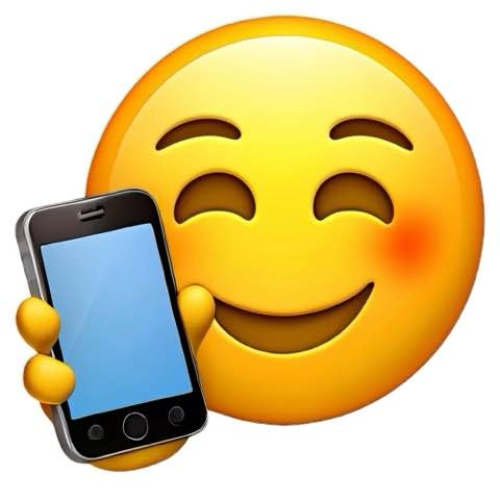
Photo: Apple Intelligence Image Playground, Public domain, via Wikimedia Commons
What It Is
In 1999, the Japanese phone company NTT DOCOMO released 176 tiny pictures for mobile phones and pagers, each drawn on a 12-by-12 grid. Shigetaka Kurita, a planner on the team building DOCOMO's new mobile internet service, i-mode, led the work because the service needed a more appealing way to communicate on a small screen. Kurita has said he was neither an artist nor a designer, so he gathered ideas from public signs, weather symbols, the zodiac, and comic-style pictures. The Museum of Modern Art also points to manga, emoticons, and a typeface of symbols called Zapf Dingbats as influences. The word emoji comes from the Japanese words e, meaning picture, and moji, meaning character. The set was an instant success, and rival companies in Japan quickly copied it.
Why It Matters
About 12 years after Kurita's first set, Apple made an emoji keyboard available to iPhone users worldwide in 2011, and emoji spread globally. Today, the Unicode standard, which lets emoji display correctly across different phones and computers, includes nearly 4,000 emoji when you count different skin tones and other variations. The Museum of Modern Art added Kurita's original 176 emoji to its permanent collection in 2016. MoMA calls them "simple, elegant, and incisive" and says they "planted the seeds for the explosion of a new visual language." The museum also describes them as powerful examples of how design can change the way people behave.