Photo: USFWS Pacific Southwest Region, Public domain, via Wikimedia Commons
What It Is
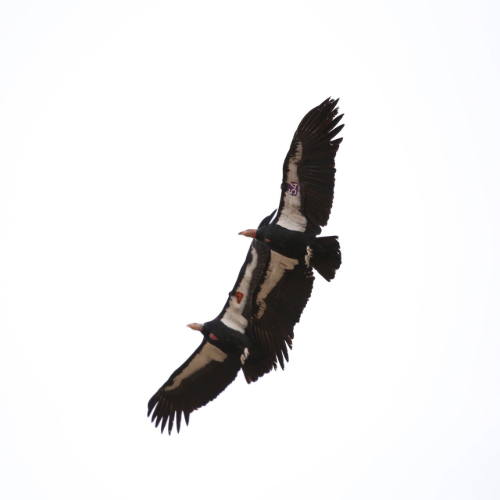
By 1982, only 22 California condors remained, and in 1987 the last wild bird was captured, leaving just 27 condors alive, all in zoos as part of an emergency breeding program. Zookeepers at facilities like the San Diego Zoo and the Los Angeles Zoo hand-raised condor chicks using puppets shaped like adult condors, so the young birds would learn to recognize and behave like condors instead of imprinting on the humans feeding them. Over decades of careful breeding, health monitoring, and behavioral preparation, zoos gradually rebuilt the population and began releasing condors into the wild in the early 1990s. Today, several hundred California condors fly free, descended entirely from the small population zookeepers worked to save.
Why It Matters
The California condor is one of the clearest examples of a species that would not exist today without zookeepers' decades of patient, detailed work. It shows that captive breeding is not just about keeping a species alive in captivity forever, but about building toward the moment a species can return to the wild on its own. The puppet-raising technique also shows how much creative problem-solving goes into conservation work, since the smallest details, like not letting a chick imprint on a human, can determine whether an entire recovery effort succeeds. The program remains an active, ongoing effort today, connecting directly to the kind of reintroduction work that may become even more common in the field's future.