Photo: Wereon, CC BY-SA 3.0 <http://creativecommons.org/licenses/by-sa/3.0/>, via Wikimedia Commons
What It Is
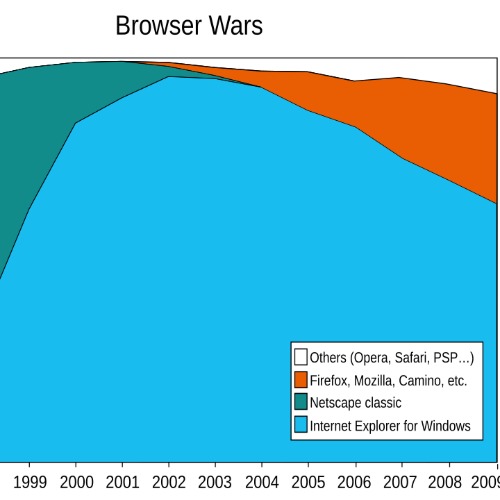
The Browser Wars were a period of fierce competition in the 1990s between Netscape Navigator and Microsoft Internet Explorer for dominance over how people accessed the internet, and the battle between them shaped the modern web in ways that web developers still feel today. Netscape launched in 1994 and quickly became the dominant way people browsed the web, capturing over 90% of the market at its peak and making its founders some of the most celebrated figures in early Silicon Valley. Microsoft, recognizing that the internet was becoming the most important platform in computing, responded by bundling Internet Explorer directly into the Windows operating system and giving it away for free, effectively using its monopoly on personal computers to push Netscape out of the market. By the late 1990s, Internet Explorer had won, Netscape had collapsed, and Microsoft controlled how the majority of the world experienced the internet. The antitrust lawsuit that followed became one of the most significant legal cases in the history of the technology industry.
Why It Matters
The lasting legacy of the Browser Wars is not who won but what the fighting broke. When Internet Explorer and Netscape were competing, each added its own custom features and ignored the standards the other supported, forcing developers to write different versions of the same website for different browsers. That chaos drove the creation of the World Wide Web Consortium's web standards movement, which established the common rules that browsers follow today and made it possible to build a website that works the same way regardless of how someone accesses it. Every time a web developer tests their site across multiple browsers, they are working in the shadow of a corporate battle fought thirty years ago.