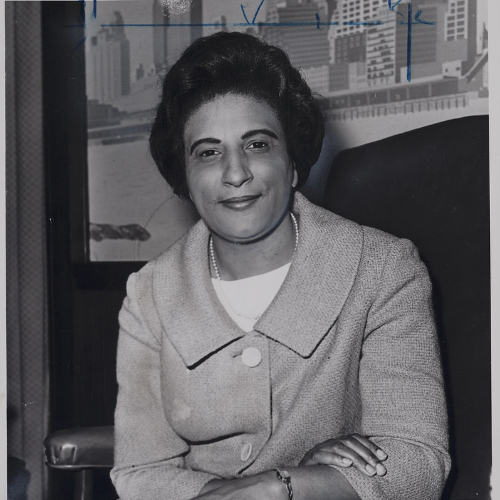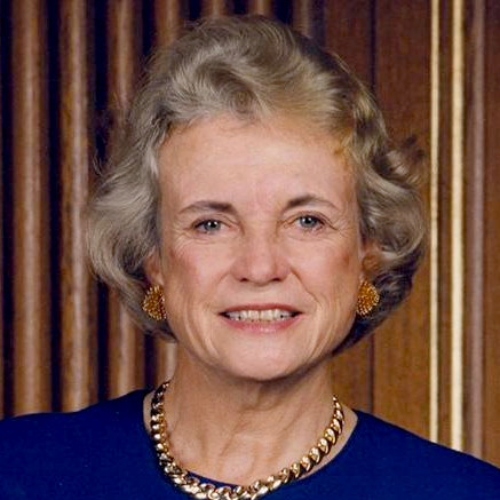
Photo: Library of Congress (Transferred by Sven Manguard,, Public domain, via Wikimedia Commons
Who She Is
Sandra Day O'Connor was the first woman to serve as a Justice of the United States Supreme Court. Born in 1930 in El Paso, Texas, she grew up on a remote cattle ranch in southeastern Arizona, where she learned to drive a tractor and fix fences before she was 10. She attended Stanford University and graduated third in her Stanford Law School class in 1952, but no law firm would hire her as an attorney because she was a woman. One firm offered her a position as a legal secretary. She refused, began her career in public service instead, and eventually became a state senator, a state trial judge, and a state appellate judge in Arizona. President Ronald Reagan nominated her to the Supreme Court in 1981, and she was confirmed unanimously by the Senate. Over 25 years on the Court, she became known as a careful, independent thinker whose votes often decided the outcome of the most closely contested cases.
Why She Matters
Sandra Day O'Connor walked into a profession that told her she did not belong and built a career that reached its highest level. Her story is not just about being the first woman on the Supreme Court. It is about what she did once she got there. O'Connor was known for weighing each case on its own facts, resisting pressure to be predictable, and writing opinions that shaped American law on issues from civil rights to religious freedom. After retiring, she founded iCivics, a free online platform that teaches young people how government and the legal system work, because she believed that democracy depends on citizens who understand it. For young people who want to see what persistence, independence, and public service look like over a lifetime, O'Connor's career is a powerful model.