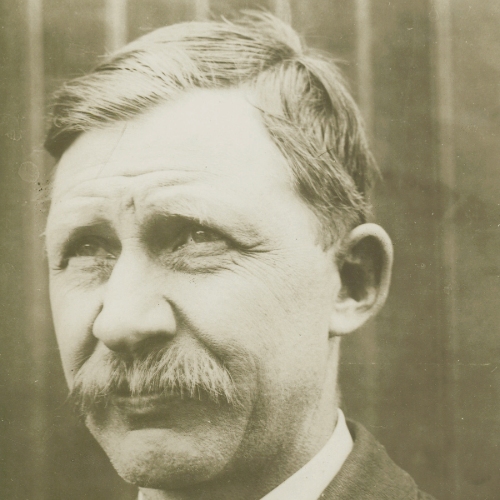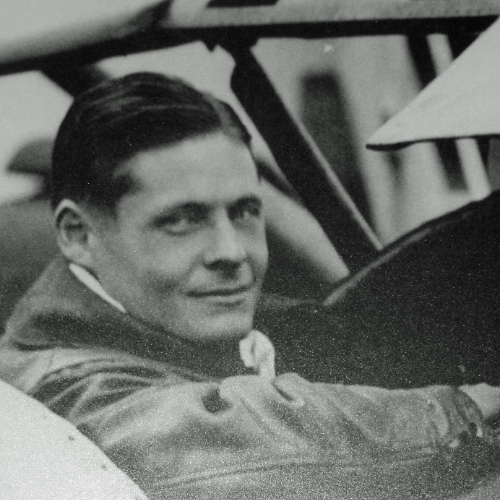
Photo: print of the photo, Public domain, via Wikimedia Commons
Who He Was
Lawrence Burst Sperry was the son of the inventor Elmer Sperry, and he taught himself to fly as a teenager. By his early twenties, he was working as an engineer at his father's company, adapting spinning gyroscopes to sense an airplane's movement and move its controls automatically. On June 18, 1914, at age 21, he flew a Curtiss flying boat low along the Seine River in Paris in front of a crowd and a panel of judges from the Aero-Club de France. On one pass he let go of the controls and stood up in the cockpit with his hands raised. On the next, his mechanic, Emile Cachin, climbed out and walked along the lower wing, deliberately unbalancing the aircraft. It kept flying straight and level. The demonstration won the 50,000-franc Concours de la Sécurité safety prize.
Why He Matters
Sperry's gyroscopic stabilizer was the world's first practical autopilot, and the idea behind it- a sensor that detects what the aircraft is doing and a mechanism that corrects it without the pilot- is the seed of every avionics system that followed. Modern autopilots, flight directors, and stability systems are its descendants, and keeping them working is a large part of what avionics technicians do. He also showed something about the trade itself: the mechanic on the wing was part of the demonstration, not a bystander.