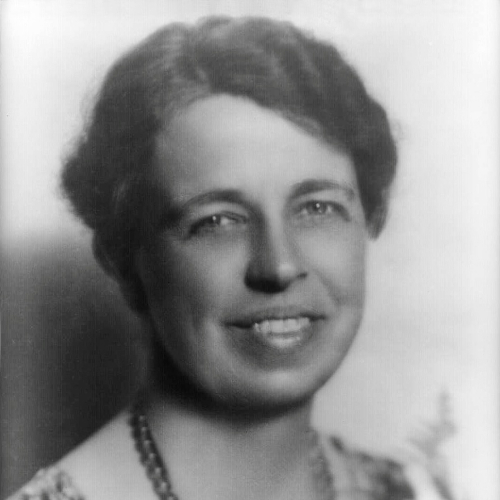
Photo: See page for author, Public domain, via Wikimedia Commons
Who She Was
After her husband's death in 1945, Eleanor Roosevelt was appointed as one of America's first delegates to the newly formed United Nations, a role many at the time assumed would be purely symbolic given that she had never held elected office. Roosevelt was assigned to chair the UN Commission on Human Rights, where she led the drafting of the Universal Declaration of Human Rights, a document meant to define the basic rights every person in the world deserves regardless of what country they lived in. Getting nearly every country in the UN to agree on a single shared document required constant negotiation, translation disputes, and compromise between countries with very different governments and values. The declaration passed in 1948, and Roosevelt is widely credited with using patience and real, careful listening to bridge disagreements that could easily have collapsed the entire effort.
Why She Matters
Roosevelt proved that a diplomat's most important tool is often not political power, but the ability to make people with very different views feel truly heard at the negotiating table. The Universal Declaration of Human Rights she helped create is still referenced today, more than 75 years later, as a global standard for how people should be treated. Her career also shows that diplomatic skill is not limited to people who start in formal government positions, since she built her influence through relationships and credibility rather than an established title. Roosevelt's work is a reminder that patient, careful listening can produce agreements that raw authority never could.