Photo: Adrian Hood, CC BY-SA 4.0 <https://creativecommons.org/licenses/by-sa/4.0>, via Wikimedia Commons
Overview
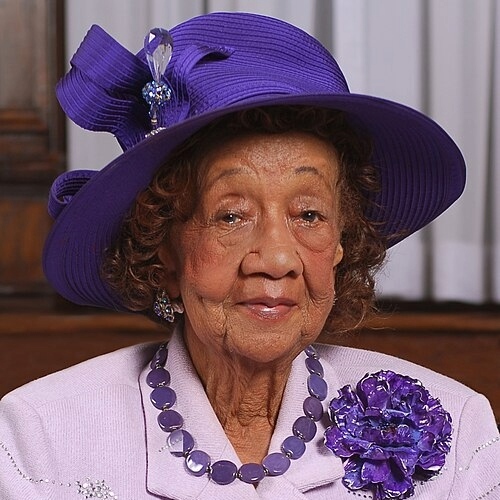
Dorothy Height began her career as a social worker in New York City in the 1930s, bringing a sharp understanding of community organizing to the Young Women's Christian Association and developing an expertise in youth development and racial equity that would define her work for the next six decades. Born in Virginia in 1912, she attended New York University after being turned away from Barnard College, which had already reached its informal quota for Black students. The experience sharpened a resolve that never left her. In 1957, she became president of the National Council of Negro Women, a position she held for 40 years, during which she led food programs, voter-registration drives, and advocacy coalitions that wove the civil rights movement directly into the everyday survival needs of Black families across the country. She was present at the March on Washington in 1963, one of the few women in visible leadership that day, and she continued advocating for equity in education, healthcare, and economic opportunity well into her nineties.
Why She Matters
Dorothy Height's career was built on a conviction that sits at the heart of social work: you cannot address a person's immediate needs without also confronting the systems that created them. Her four decades leading the National Council of Negro Women demonstrated what becomes possible when community organizing, direct service, and policy advocacy operate not as separate efforts but as a single, sustained force for change. She understood that the most powerful social work is not about managing hardship but about dismantling the conditions that produce it. Height's life is a reminder that the profession has always attracted people who refuse to accept injustice as inevitable, and that sustained, decades-long commitment to a cause can reshape the world in ways that no single moment of activism can.