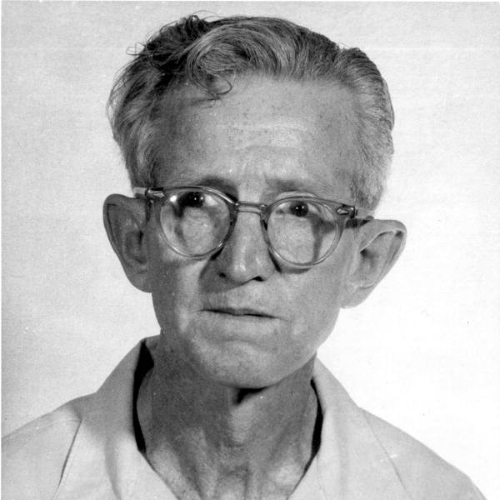
Photo: http://www.floridamemory.com/items/show/35169, Public domain, via Wikimedia Commons
Overview
Clarence Earl Gideon was a Florida man with an eighth-grade education who was accused in 1961 of breaking into a pool hall in Panama City. He could not afford a lawyer and asked the judge to appoint one for him, but Florida law at the time only required that for the most serious cases, so his request was denied. Gideon had to defend himself at trial, was found guilty, and was sentenced to five years in prison. Convinced his trial had been unfair, he began studying law books in the prison library. With some help from a fellow prisoner, he wrote a petition in pencil asking the U.S. Supreme Court to hear his case, and it arrived at the Court in January 1962. The Court agreed to take the case and appointed Abe Fortas, a respected Washington lawyer who later became a Supreme Court justice, to argue it. On March 18, 1963, the Court ruled unanimously in Gideon's favor. He was given a new trial, this time with a lawyer, and was found not guilty.
Why He Matters
Because of Gideon v. Wainwright, states must provide a lawyer to people charged with serious crimes who cannot afford one, a right that affects countless cases across the country every year. The case began with a man who had no legal training, just law books, persistence, and a carefully written document that followed the rules closely enough for the highest court in the country to take it seriously. For students interested in a paralegal career, Gideon's story shows the power of the skills paralegals use every day: researching the law, understanding legal procedure, and putting an argument in writing clearly and correctly. It is also a reminder that careful legal work can protect the rights of people who might otherwise have no one to help them.